
Complete Ride Footage
A complete ride footage archive preserving the attraction experience.
Back to the Future: The Ride was one of Universal Studios Hollywood’s most ambitious and beloved attractions. Built around the Institute of Future Technology, Doc Brown, Biff Tannen, and an eight passenger time vehicle, the ride transformed a blockbuster film franchise into a massive motion simulator experience with dome projection, synchronized motion bases, preshow storytelling, and the kind of cinematic scale that defined Universal at its best.
This page is part of the growing Cow Missing Archive and will continue to expand as additional photos, videos, technical documentation, and historical materials are preserved.
Use these quick links to explore this archive.
Back to the Future: The Ride was not simply a simulator placed behind a movie logo. It was designed as a complete attraction environment. Guests entered the Institute of Future Technology, moved through preshow spaces filled with monitors and story setup, learned that Biff Tannen had escaped and stolen the DeLorean, then boarded Doc Brown's new time travel vehicle to chase him across time.
The Hollywood version opened during a major growth era for Universal Studios Hollywood. It gave the park a signature high capacity thrill attraction that felt connected to the films, the studio, and the backlot mythology of Universal. The experience combined comedy, danger, speed, film nostalgia, and technical showmanship in a way that made it one of the most remembered attractions in the park's history.
For many fans, the ride represented Universal's core promise: step inside the movies. The building, preshow, story, ride vehicles, large format projection, sound design, and physical motion all worked together to make guests feel like they were part of a new Back to the Future chapter.
For more detailed historical information about this attraction, visit TheStudioTour.com. This Cow Missing page is designed as a visual media archive experience featuring videos, photos, attraction audio, artwork, operations material, and curated media collections.
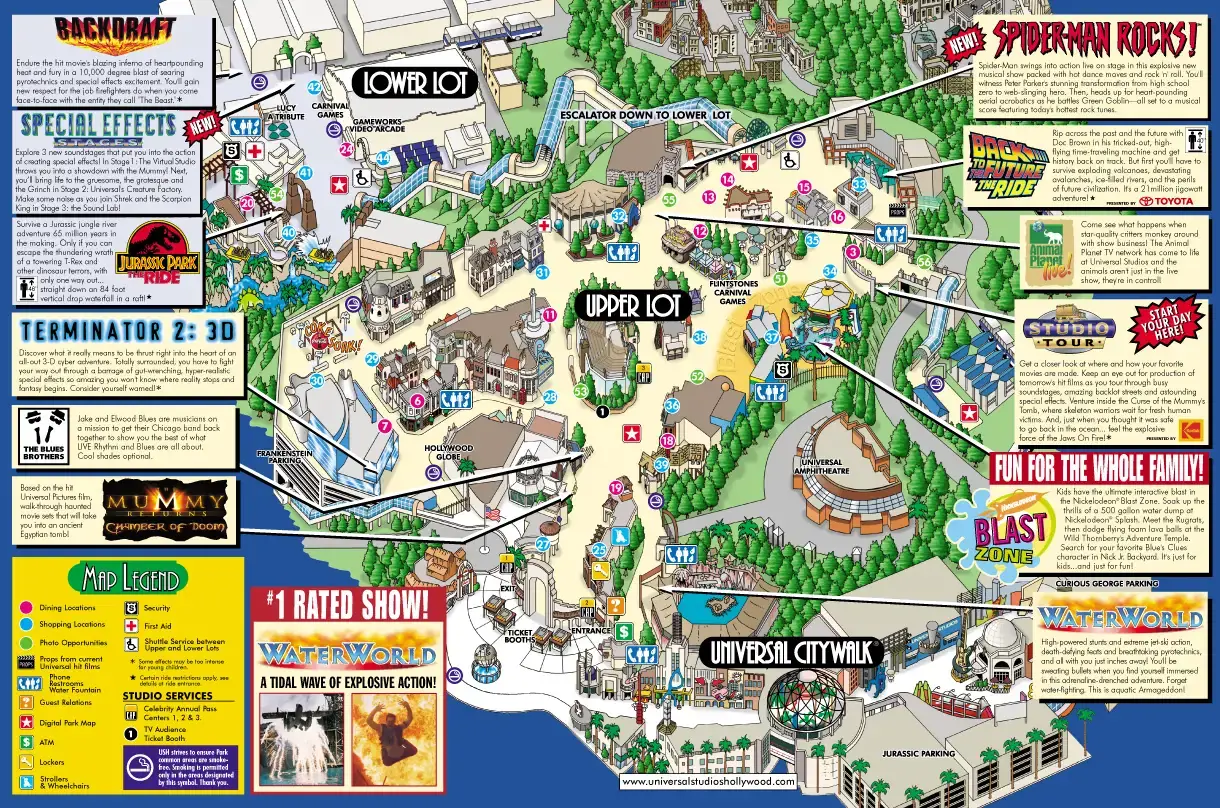
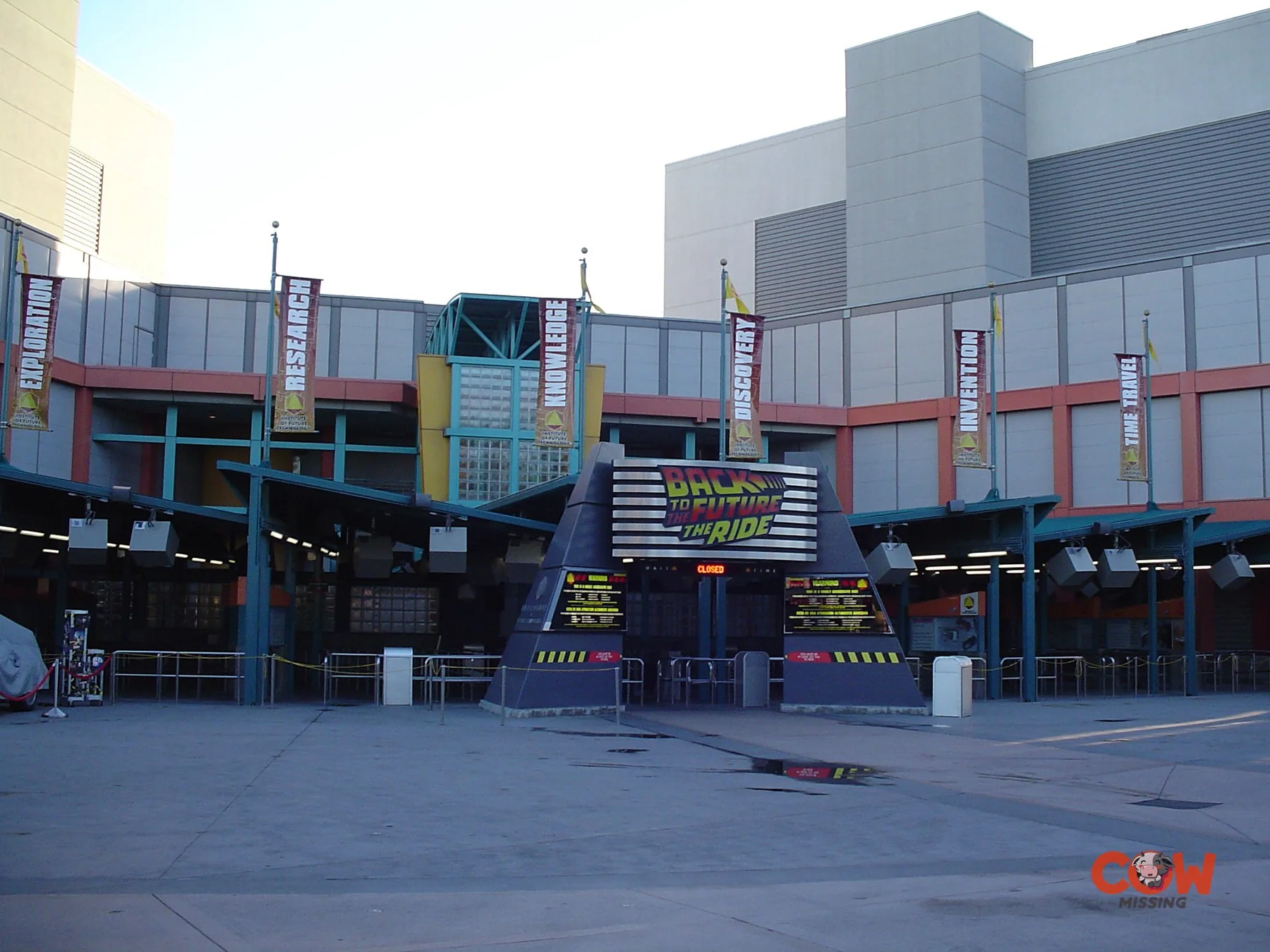
Back to the Future: The Ride operated on the Upper Lot at Universal Studios Hollywood in the Entertainment Center area, positioned between the StarWay escalators to the left and the Studio Tour entrance to the right. Its placement made the Institute of Future Technology a major visual landmark for guests moving between the Upper Lot, Studio Tour, and Lower Lot areas.
Back to the Future was already one of Universal's most recognizable film franchises by the time the ride was developed. The attraction gave Universal a way to extend the films beyond the screen while keeping the tone, characters, and time travel energy that audiences loved.
Rather than retelling the movie, the attraction created a new setting. The Institute of Future Technology allowed Doc Brown to appear as host, inventor, and mission leader. It also gave Universal a believable reason for guests to board an experimental time vehicle inside a research facility.
Biff Tannen worked perfectly for a ride because he could cause chaos quickly. Once Biff stole the DeLorean, the story became immediate and easy to understand: guests had to help Doc chase Biff through time and prevent damage to the timeline.
This section preserves the engineering, show systems, operational documentation, and technical elements that powered Back to the Future: The Ride. From motion systems and projection technology to control rooms and operating procedures, these materials document the behind-the-scenes infrastructure that brought the attraction to life.
The ride used a large format dome film presentation paired with simulator vehicles mounted on hydraulic motion bases. Instead of looking at a flat screen, guests faced a huge domed image that filled their field of view. The motion vehicle responded to the action on screen, creating the sensation of acceleration, falling, banking, crashing, and flying through time.
Each vehicle carried eight passengers and acted as Doc Brown's new time vehicle. The combination of synchronized movement, intense sound, visual scale, and the familiar Back to the Future score made the ride feel bigger than a conventional theater show.
The attraction used 70mm large format film for the dome presentation, giving the ride a massive image with strong visual impact.
Guests sat in time vehicles that moved with the ride film, creating the physical sensation of chasing Biff through different time periods.
The queue, preshow, loading rooms, safety setup, and ride film all supported the same Institute of Future Technology storyline.
Early design and development work began on the attraction concept, translating the Back to the Future universe into a ride experience.
The ride film was produced using large format ride film techniques and practical visual effects methods tied to the era.
Back to the Future: The Ride opened at Universal Studios Florida, becoming the first version of the attraction to operate inside a Universal park.
Back to the Future: The Ride opened at Universal Studios Hollywood on the Upper Lot in the Entertainment Center area, replacing Battle of Galactica with a new Institute of Future Technology attraction environment.
Back to the Future: The Ride opened at Universal Studios Japan, extending the attraction's presence to Osaka.
The Universal Studios Florida version closed after nearly sixteen years of operation.
The Hollywood version closed after more than fourteen years of operation and remained one of Universal Studios Hollywood’s most remembered fan favorite attractions.
The Hollywood building reopened as The Simpsons Ride, using the same general ride building concept with a new theme.
The Universal Studios Japan version closed, ending the attraction's run at Universal parks.
This section organizes photographs, artwork, advertising, press materials, and video collections that document Back to the Future: The Ride. These preserved materials capture not only the guest experience, but also the creative, promotional, and operational history surrounding the attraction.
This collection organizes the uploaded Back to the Future: The Ride material into focused archive sections. The goal is to preserve not only what guests saw, but also the planning, marketing, technical systems, operating documents, and franchise connections that made the attraction important.
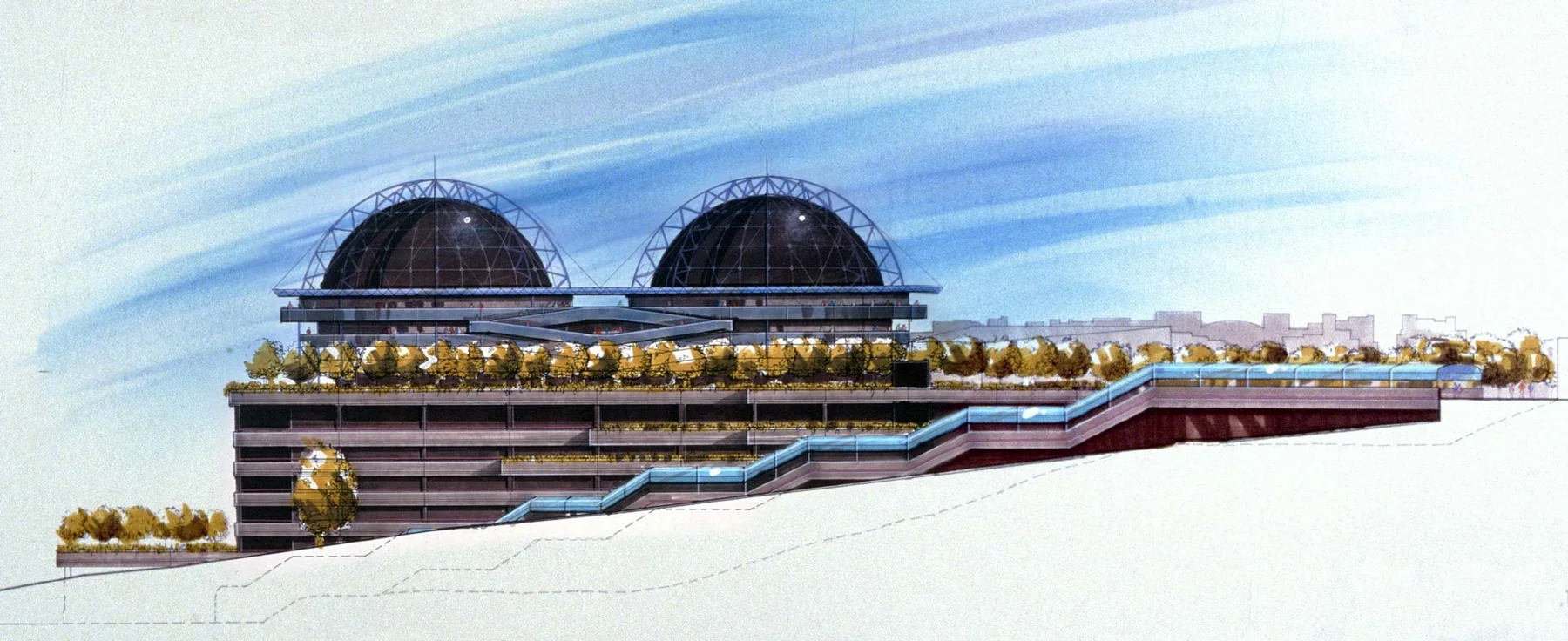
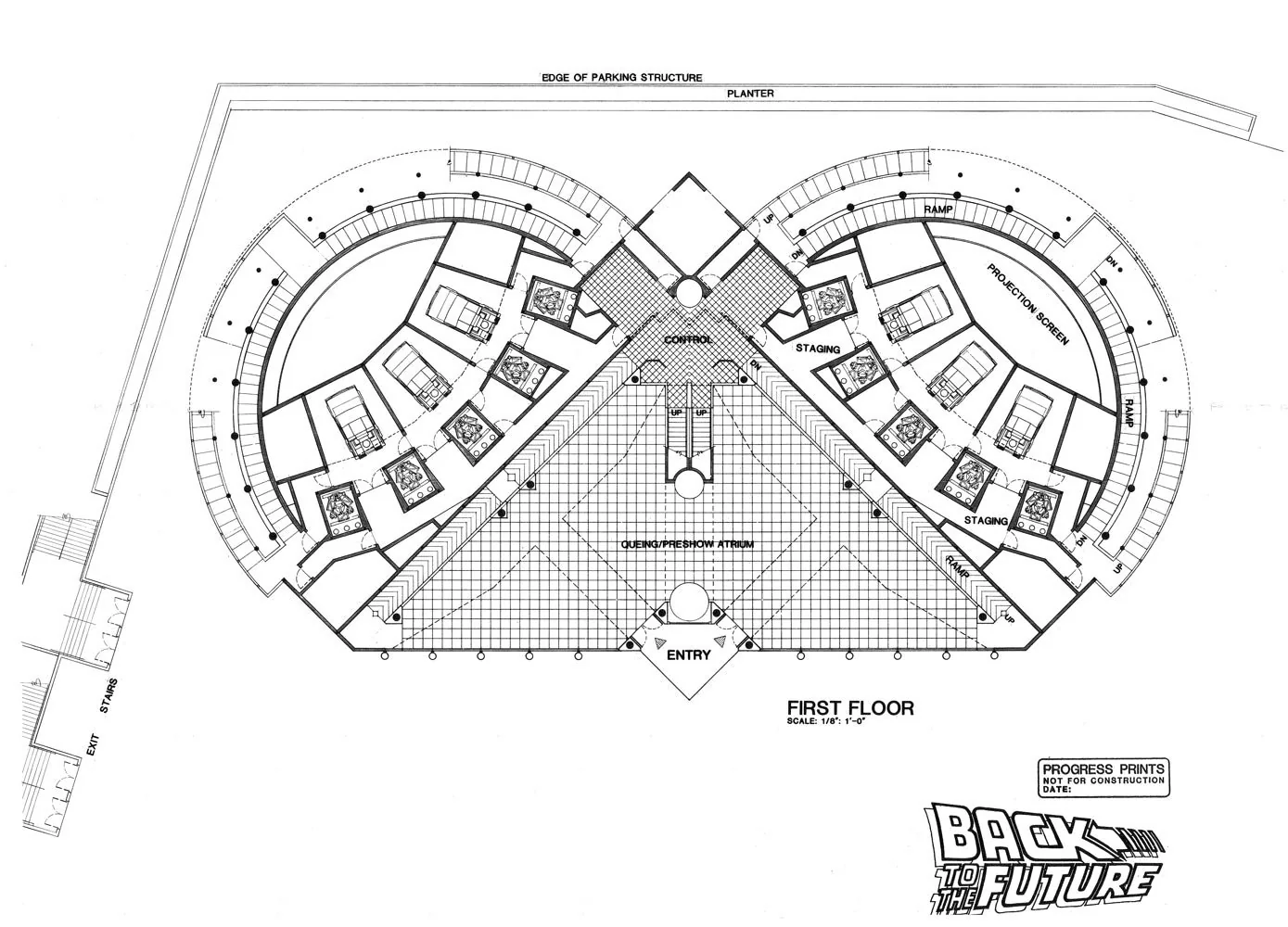
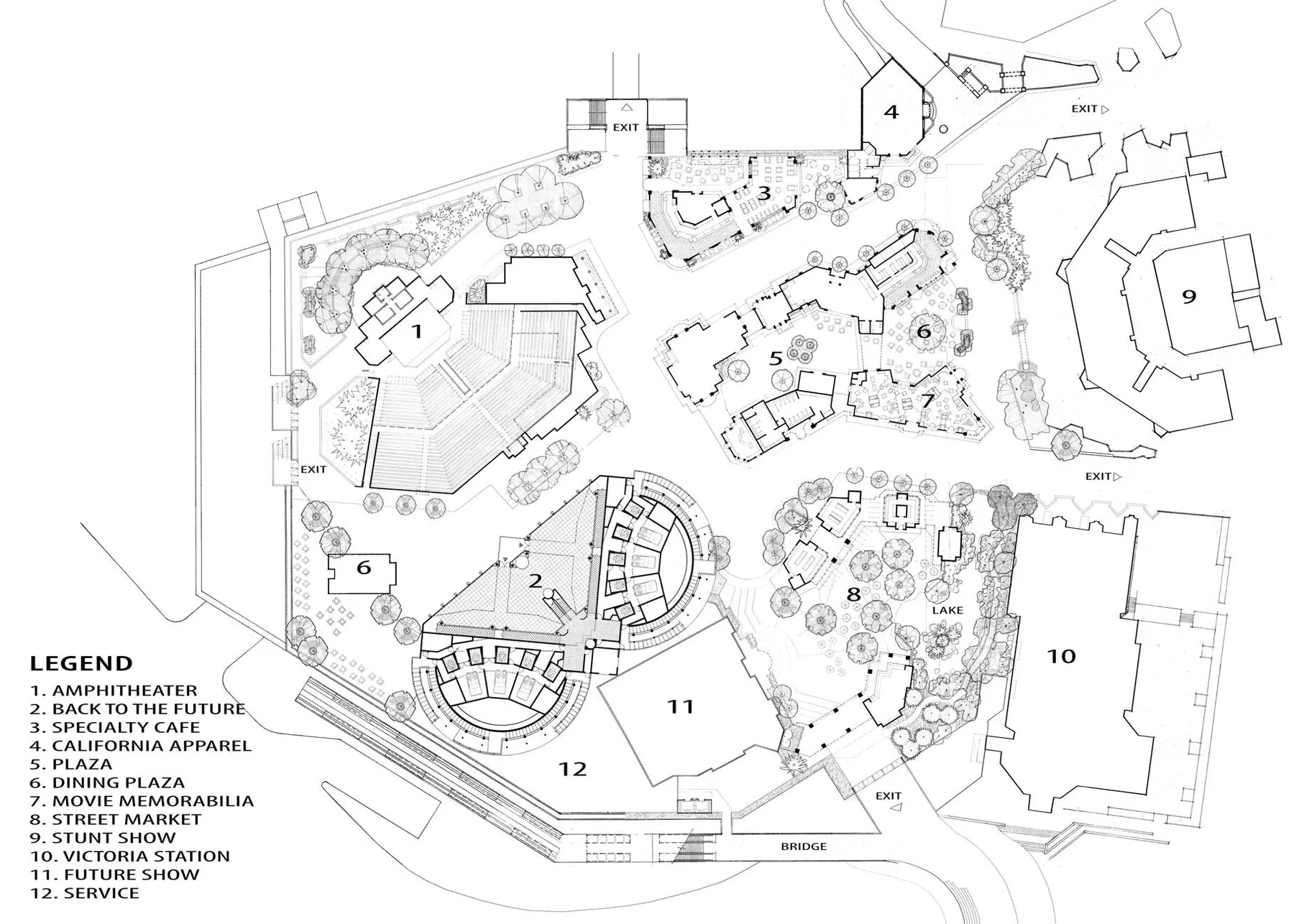
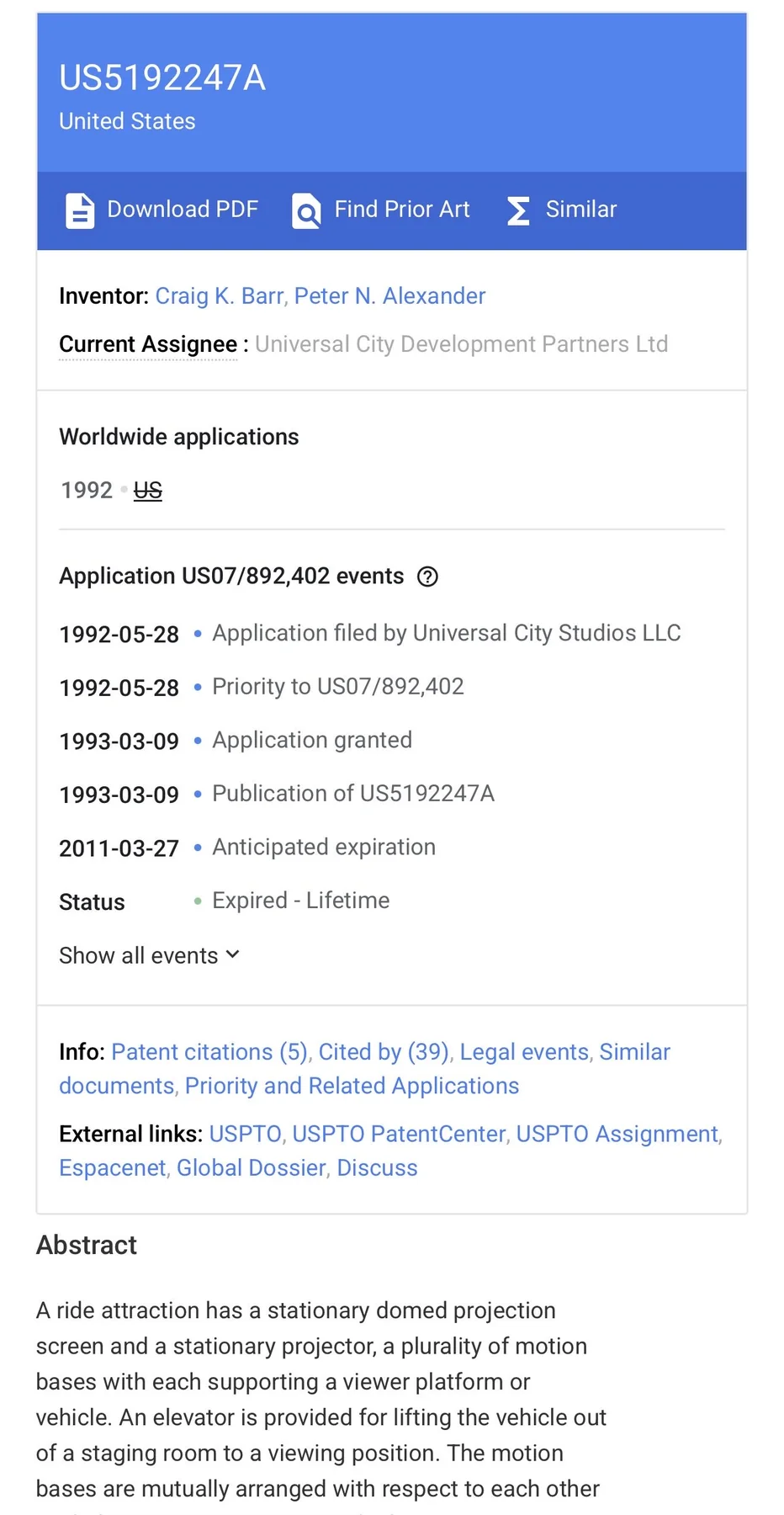
These drawings document an early proposed location for Back to the Future: The Ride on top of the Frankenstein Parking Garage. This concept was never built. Universal ultimately placed the attraction on the former Battle of Galactica site and created a new Upper Lot area for the Institute of Future Technology. The final attraction required a major new structure, including construction beams driven roughly 80 feet into the ground to support the large ride building and dome based simulator system.
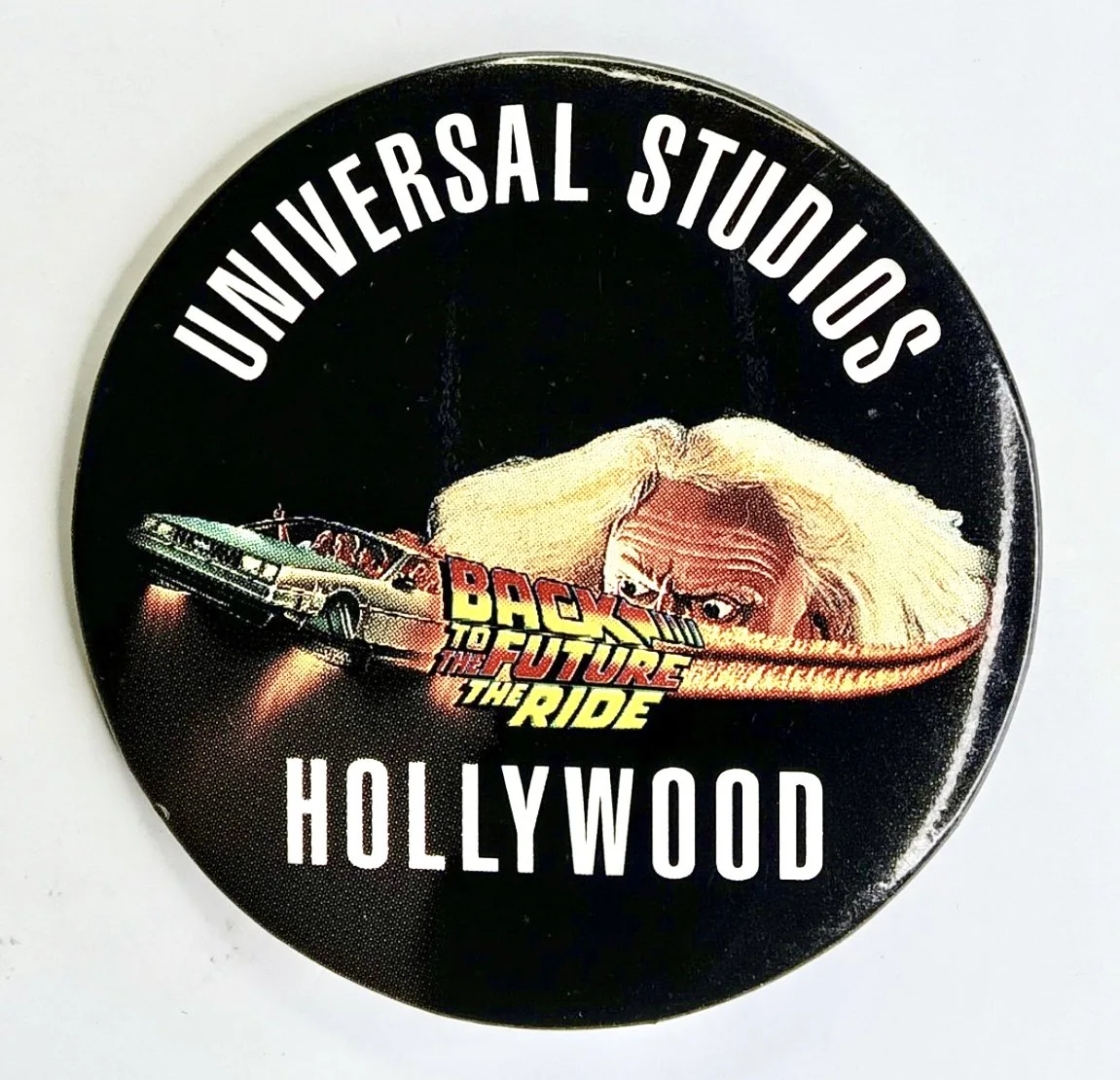
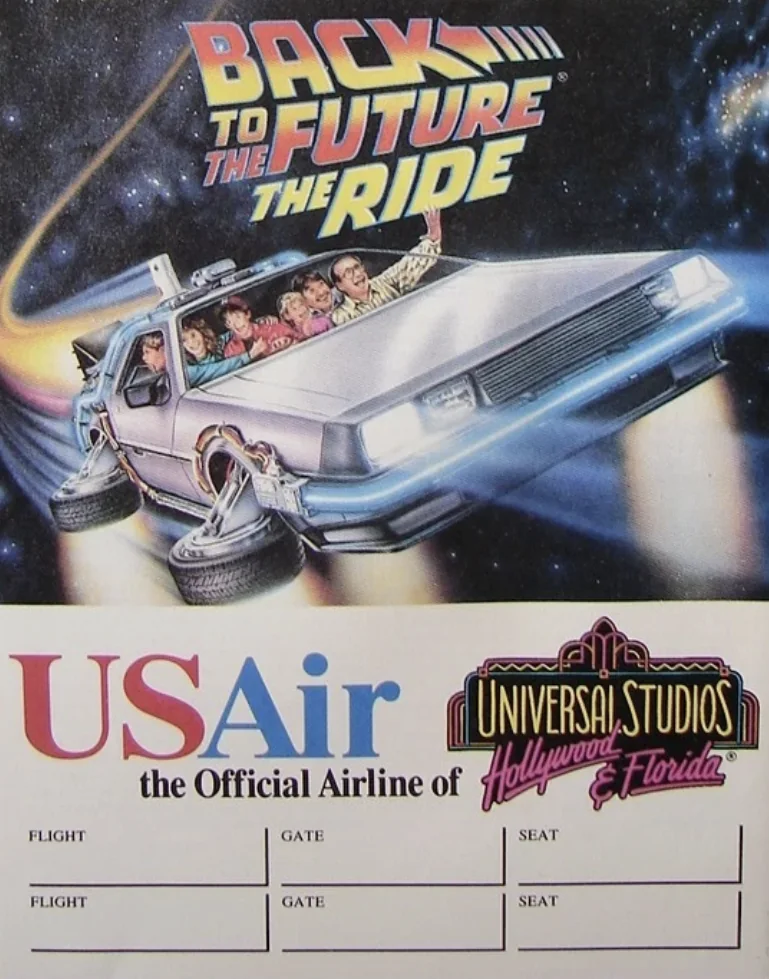
The advertising collection shows how Universal promoted the attraction as a major blockbuster experience. These pieces lean into the film franchise, the DeLorean, time travel, Doc Brown, and the promise that guests could go beyond watching the movies and actually ride through them.
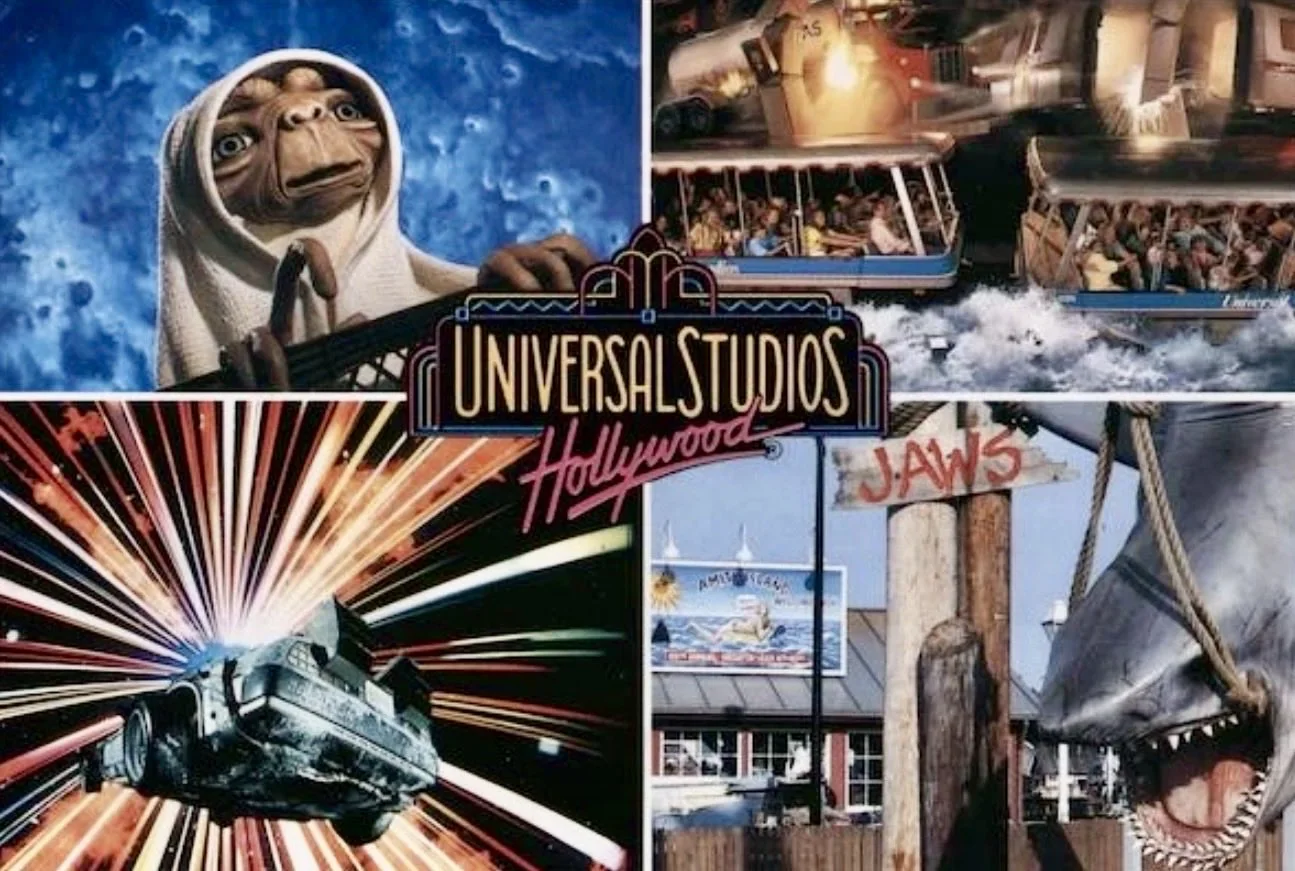
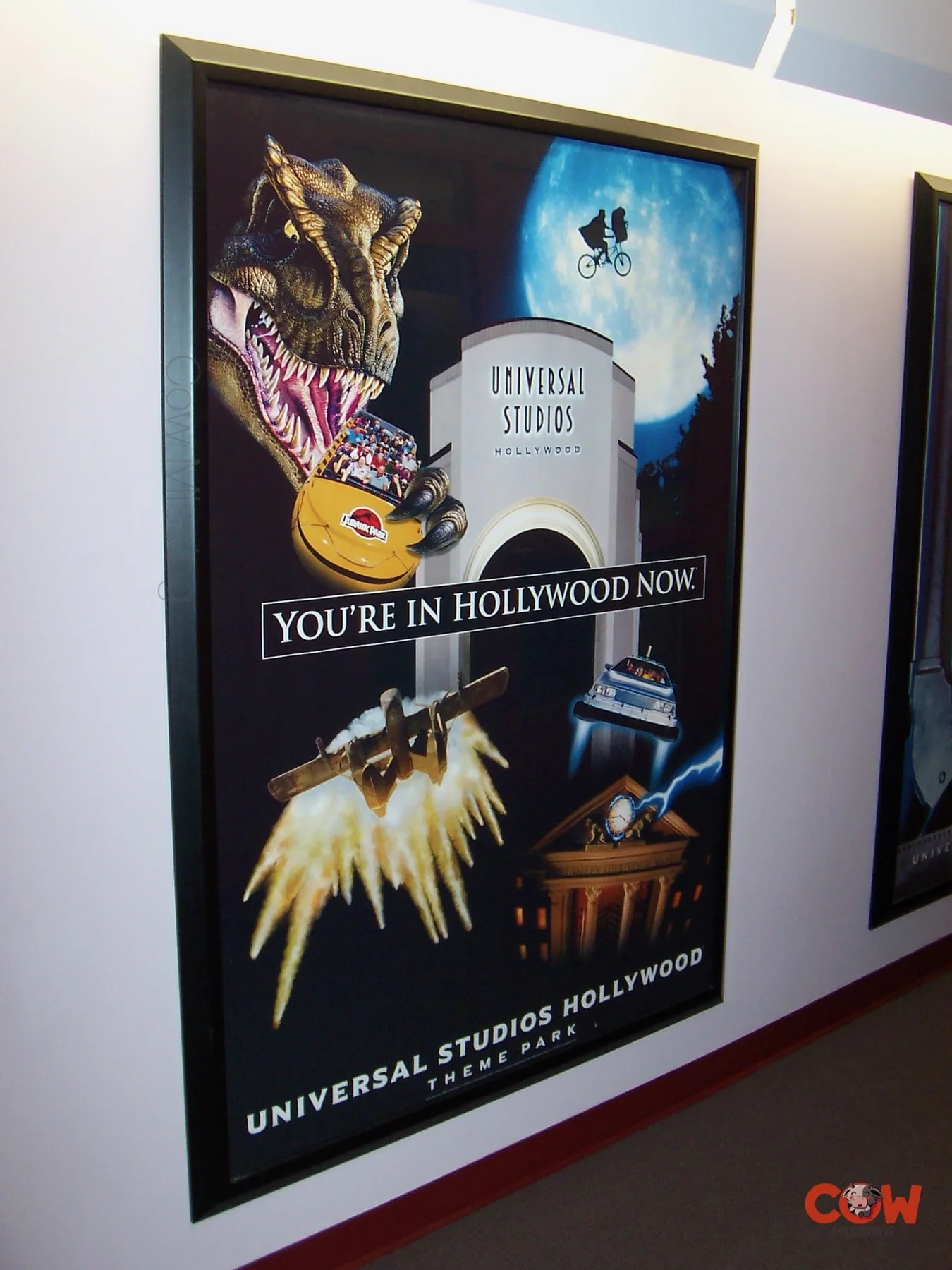
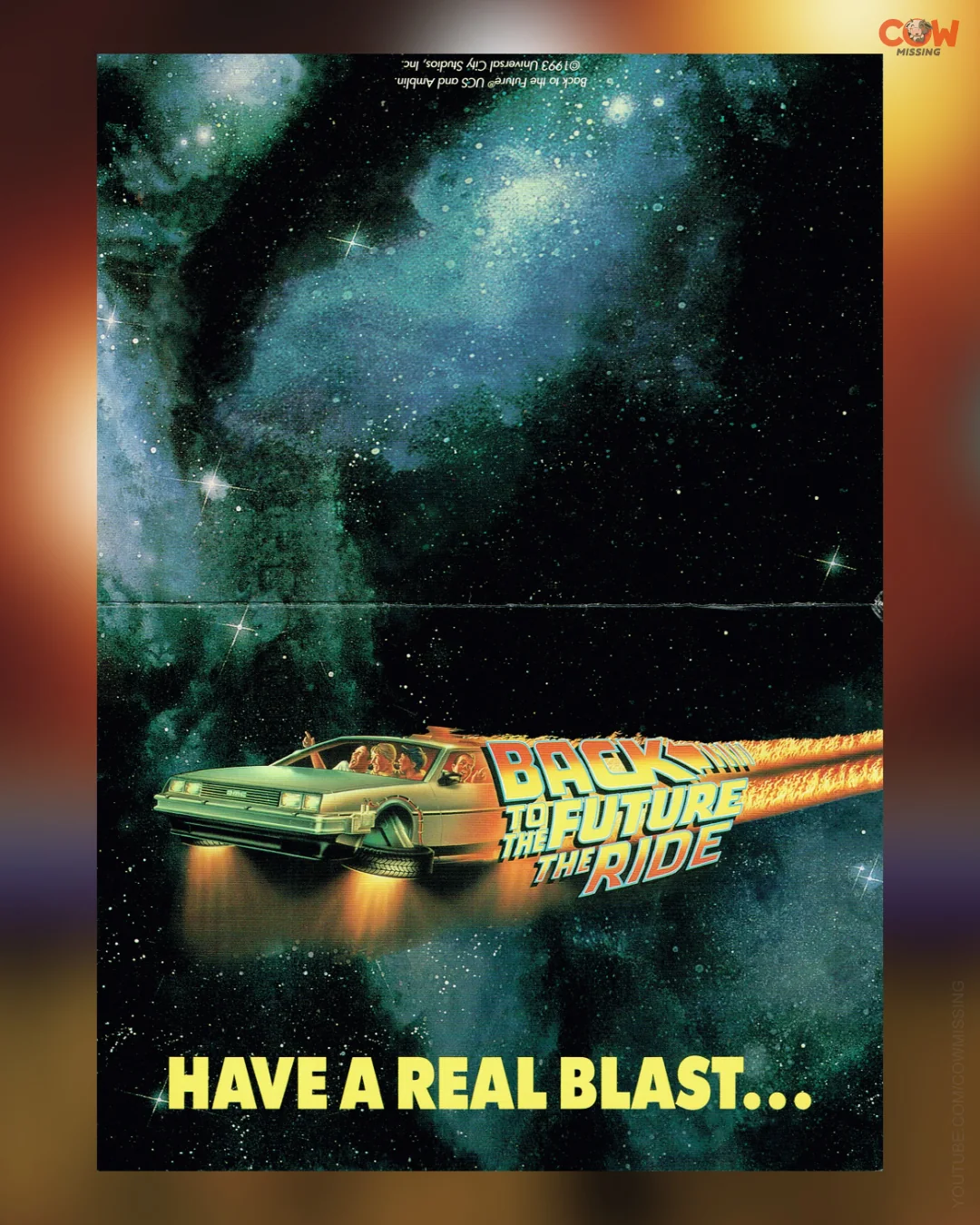
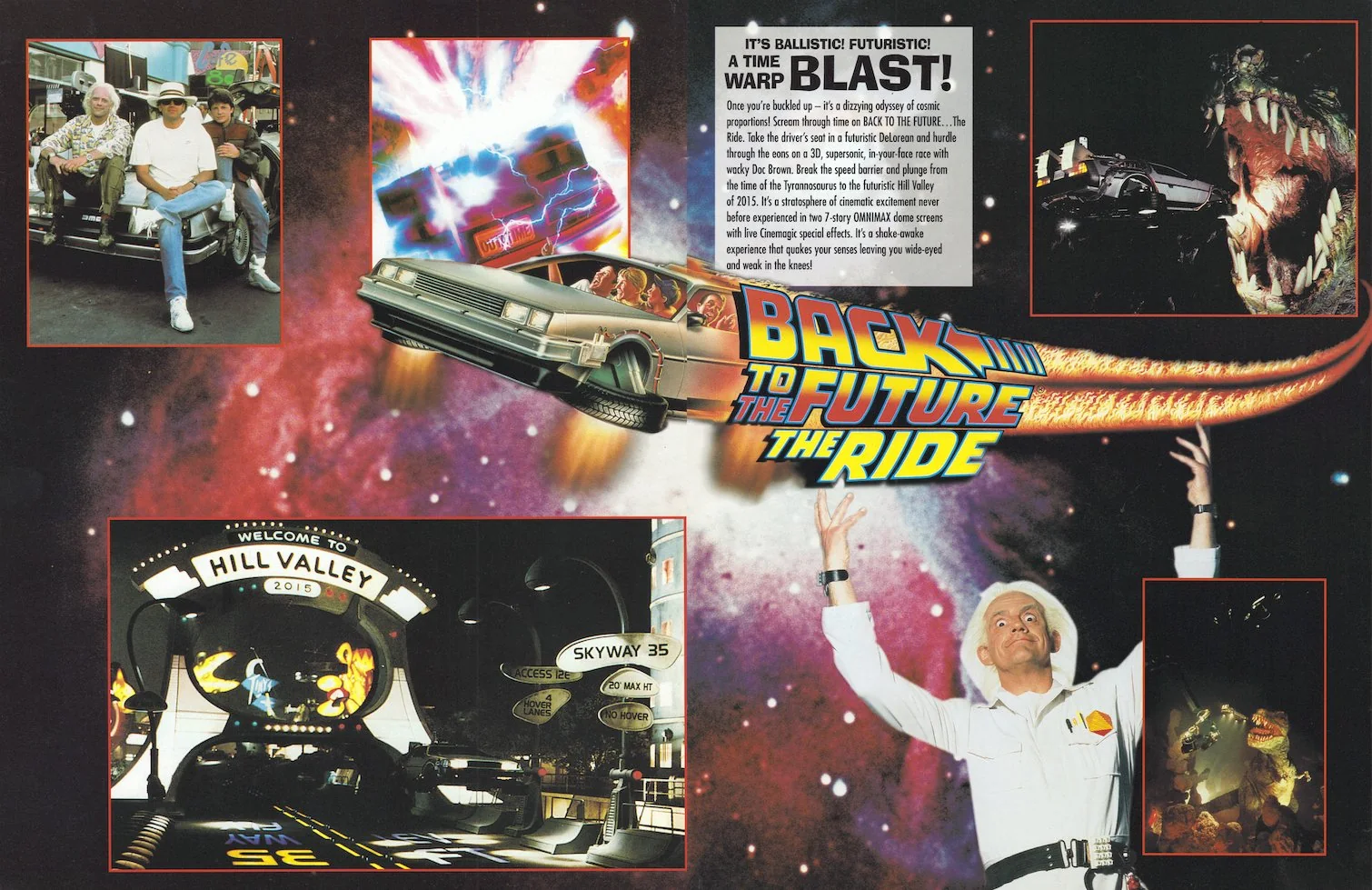
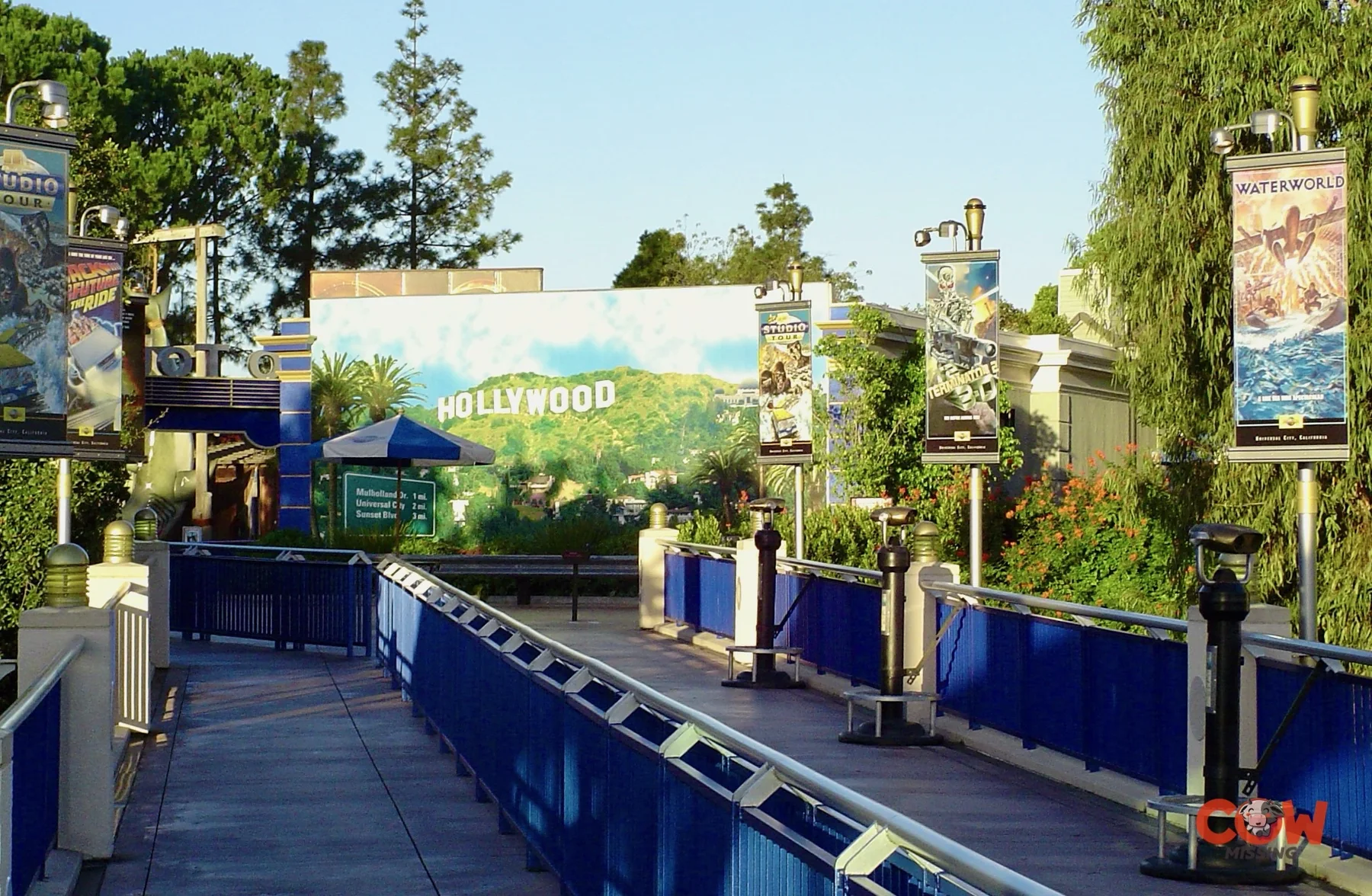
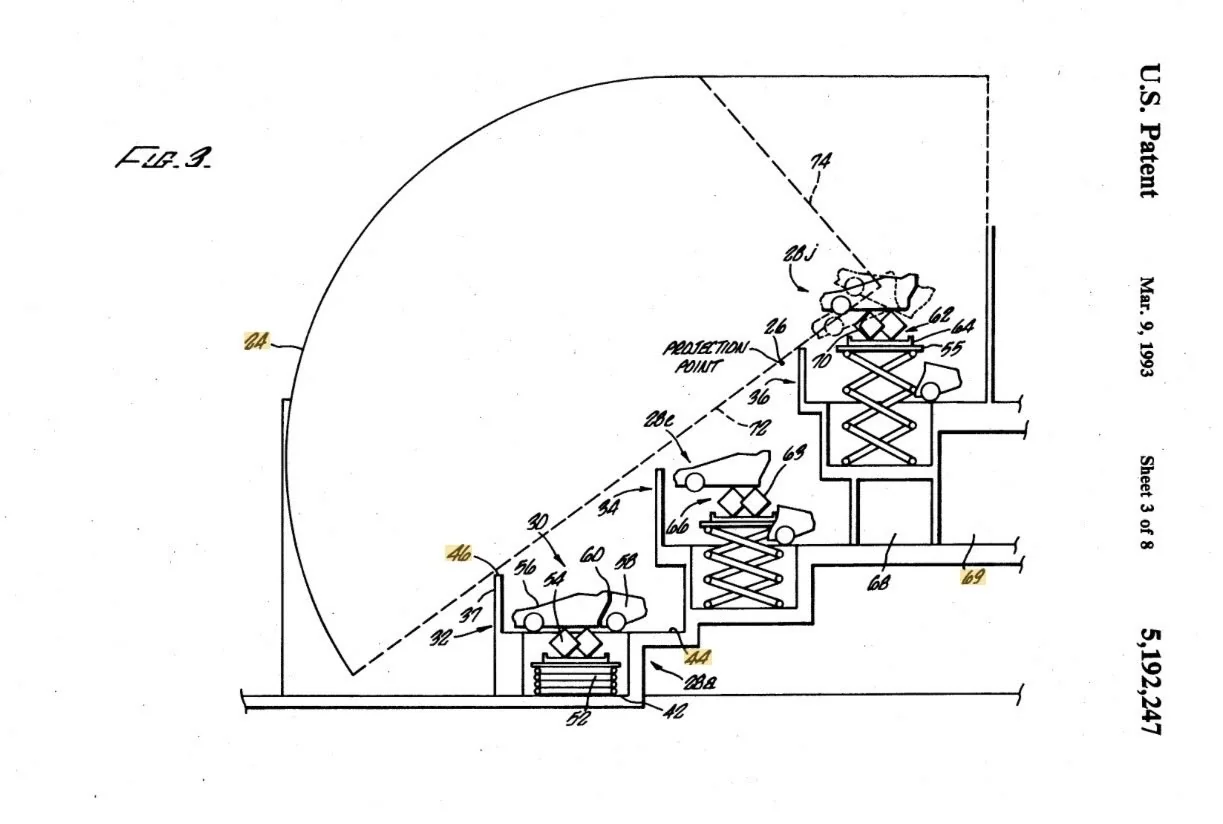
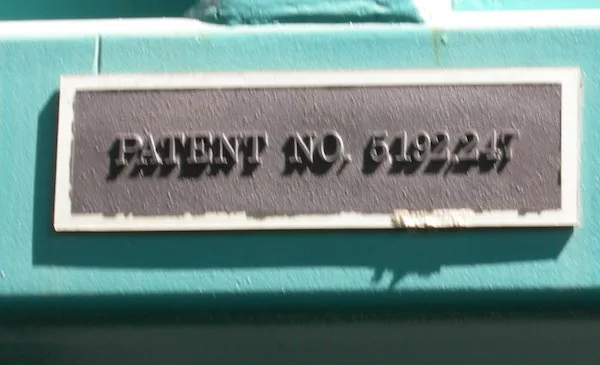
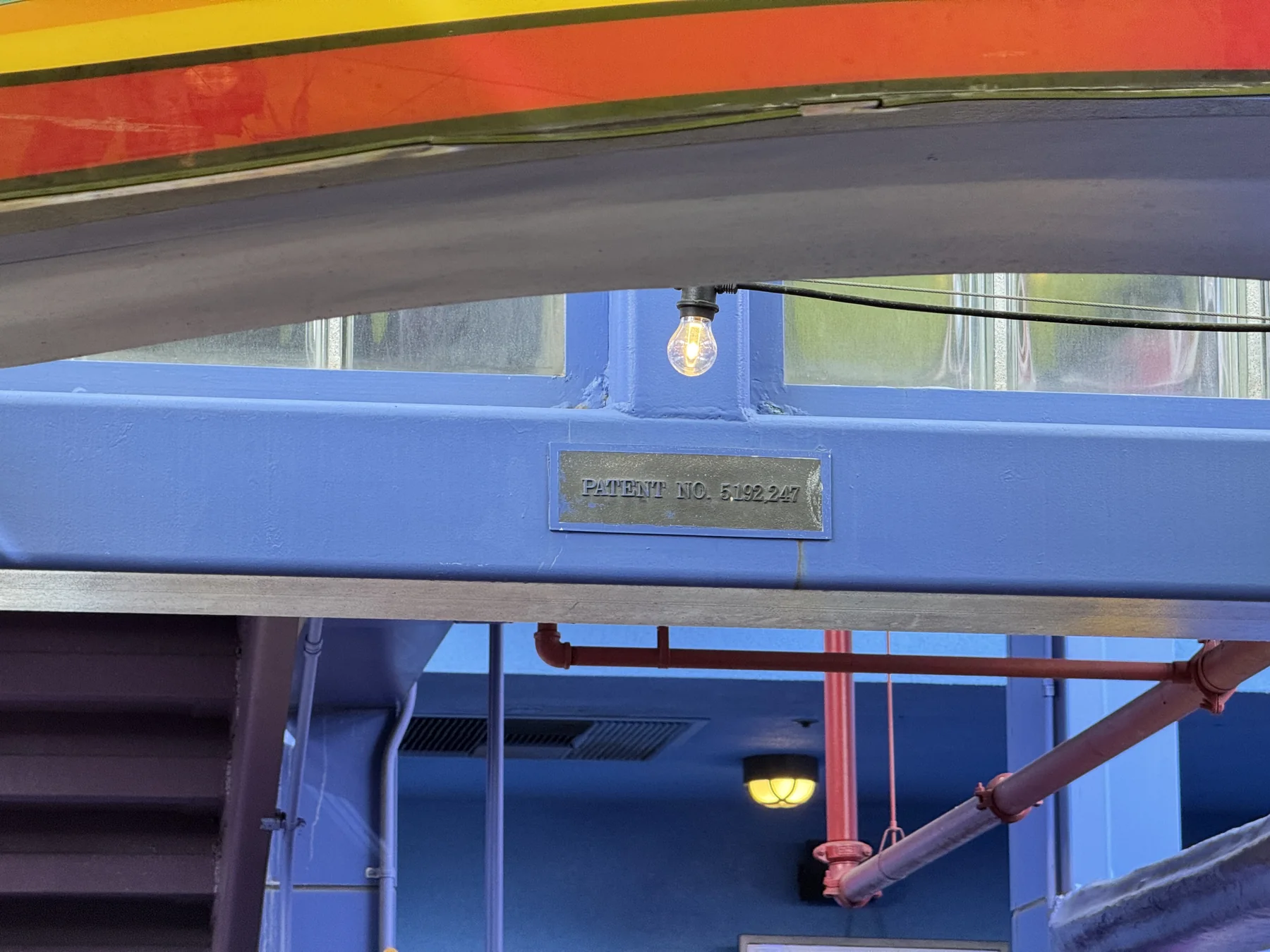
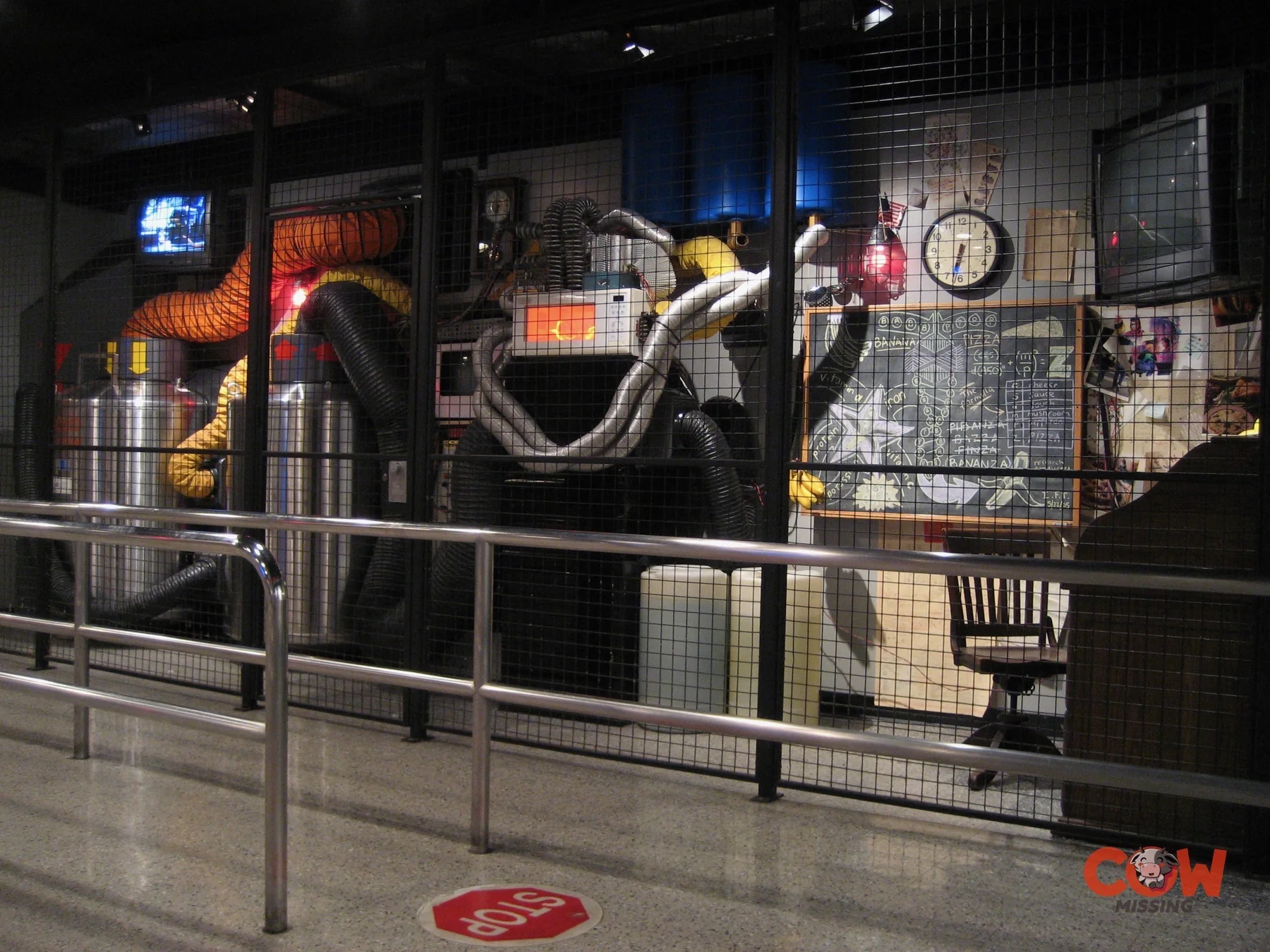
The building archive documents the attraction exterior, preshow areas, Biff storyline elements, patent style ride system drawings, projector references, and interior details. These images are especially important because the attraction's world building started long before guests boarded the ride vehicle.
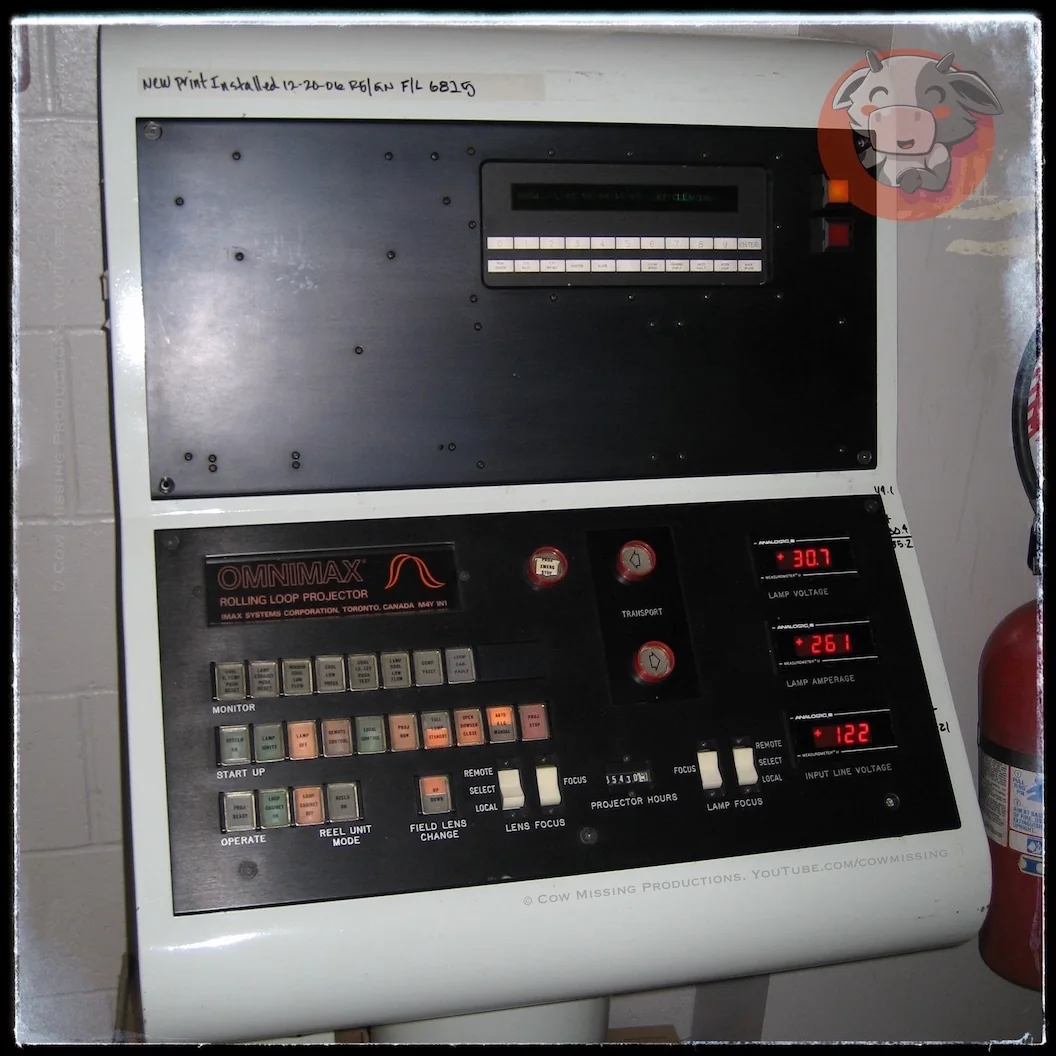
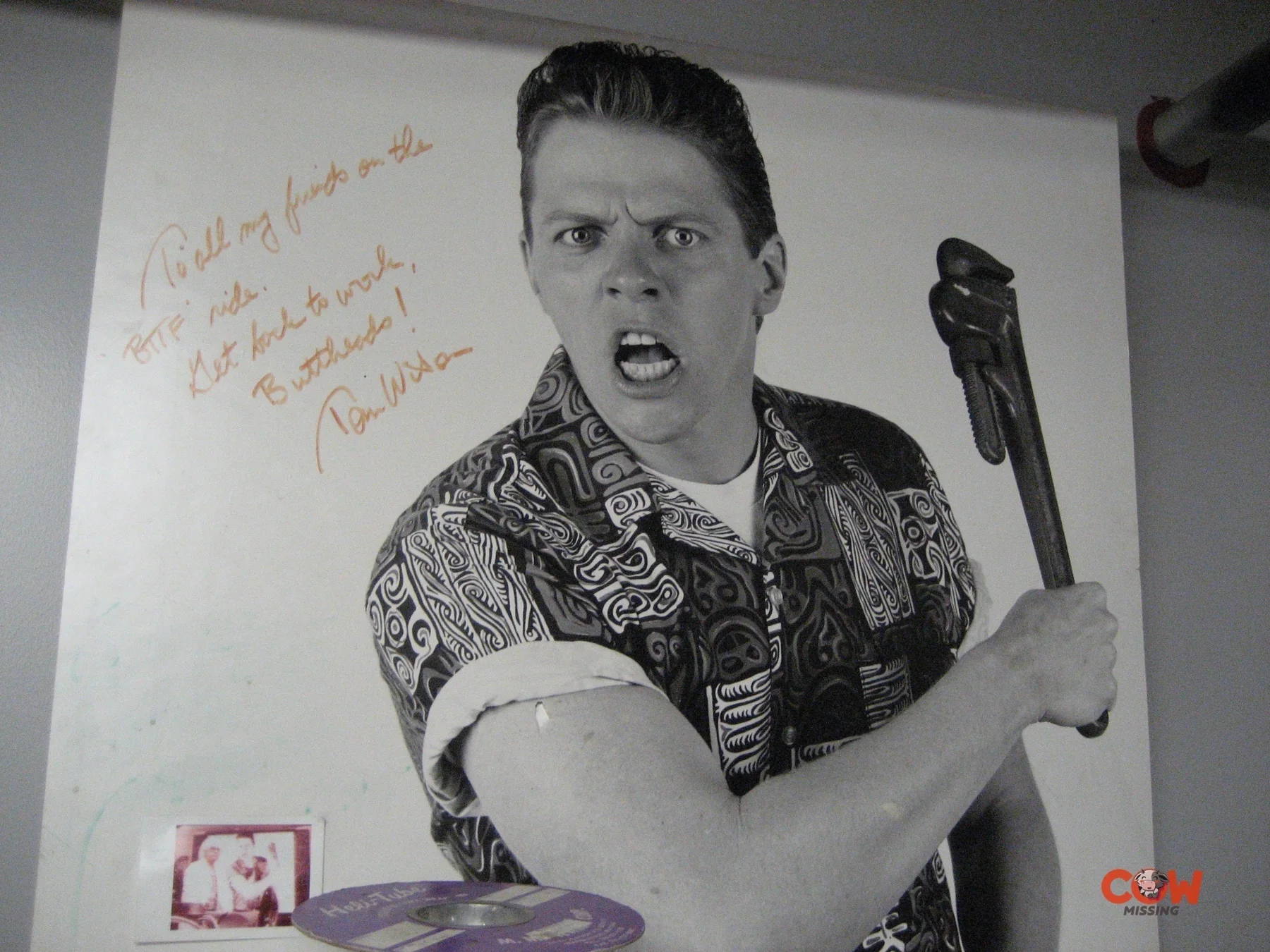
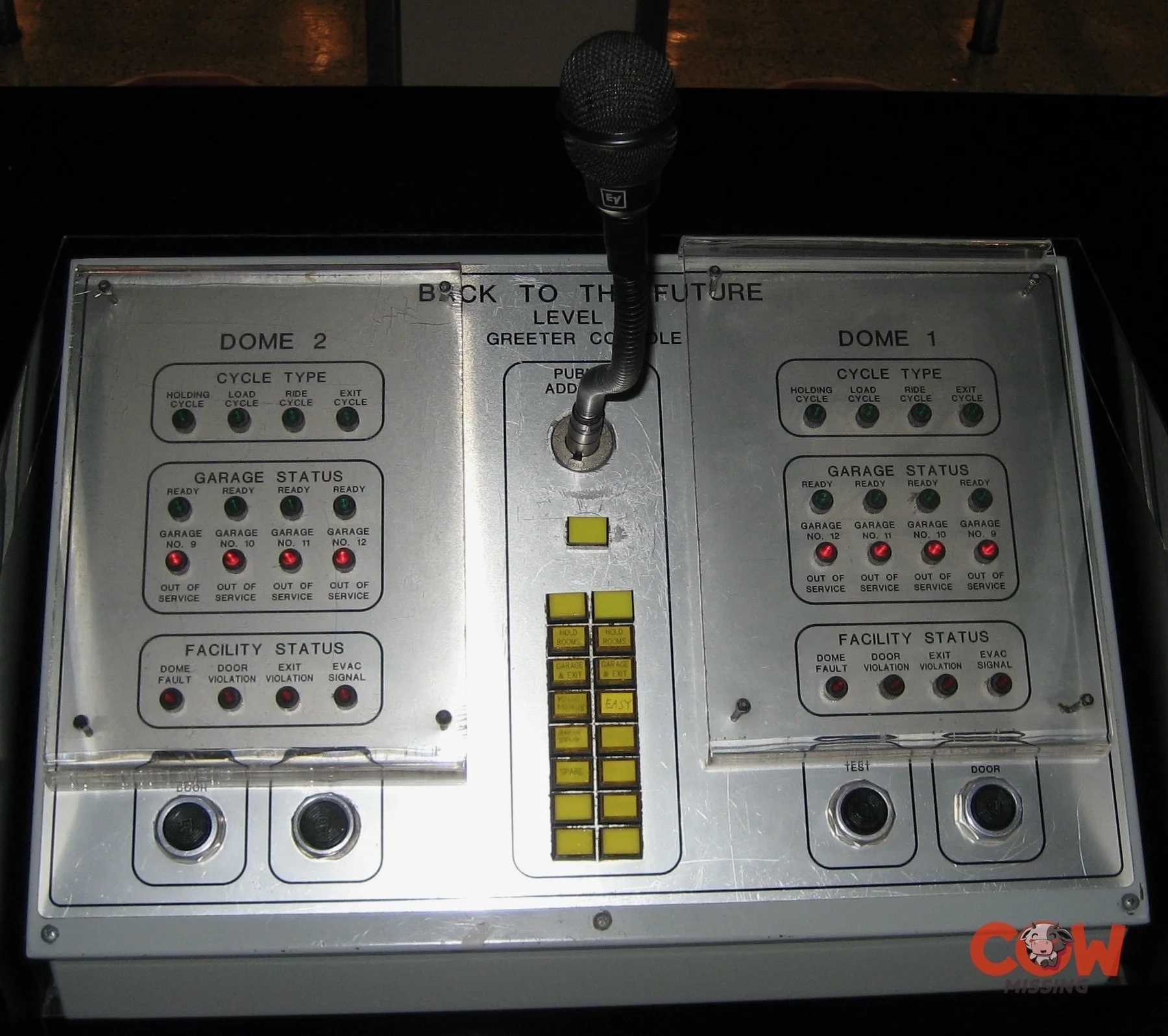
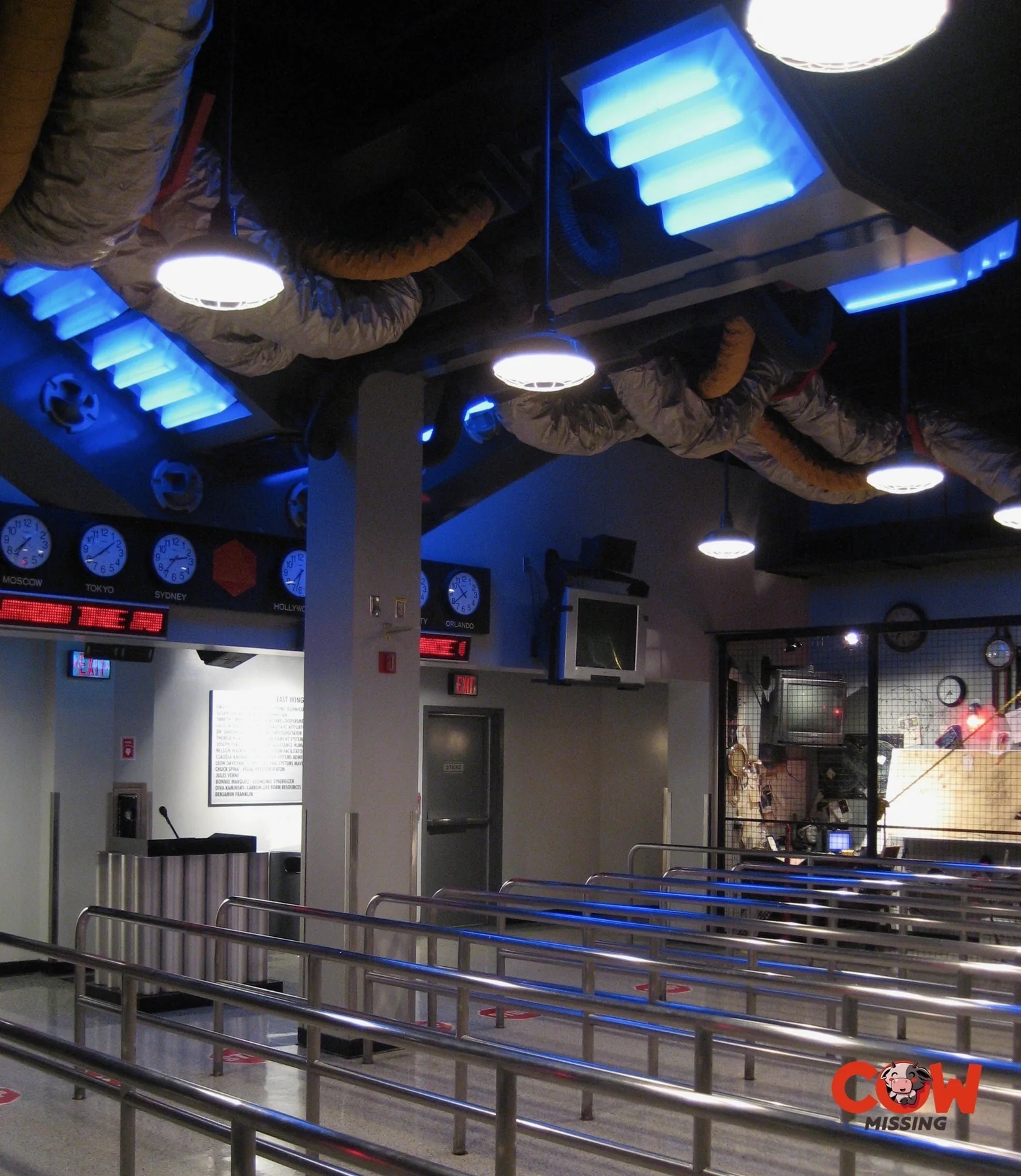
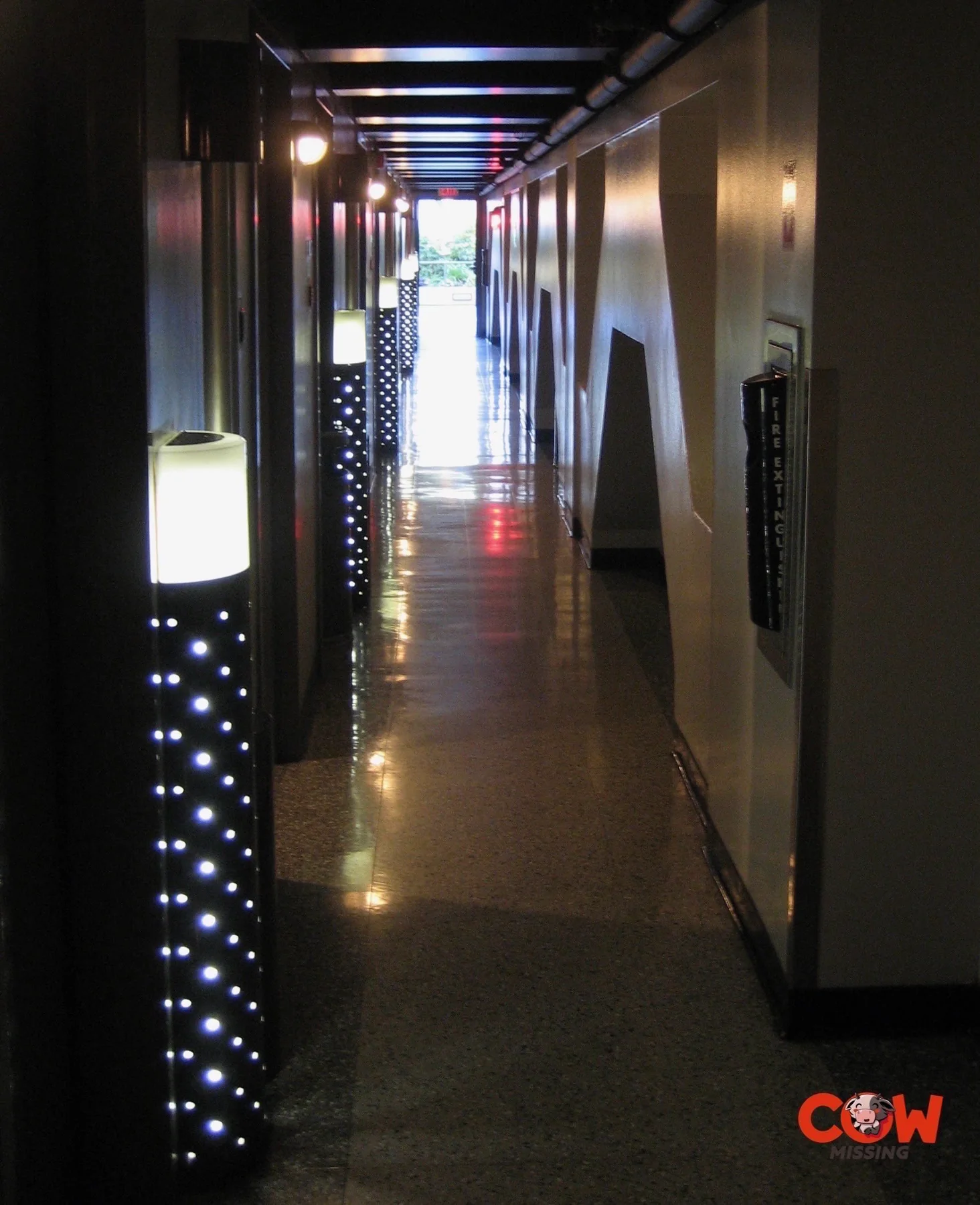
The control room, often referred to as the tower, gives this archive a rare behind the scenes look at how the attraction was monitored and operated. These images show monitor positions, public address equipment, ride control panels, access points, and the operational environment that supported a complex multi vehicle simulator attraction.
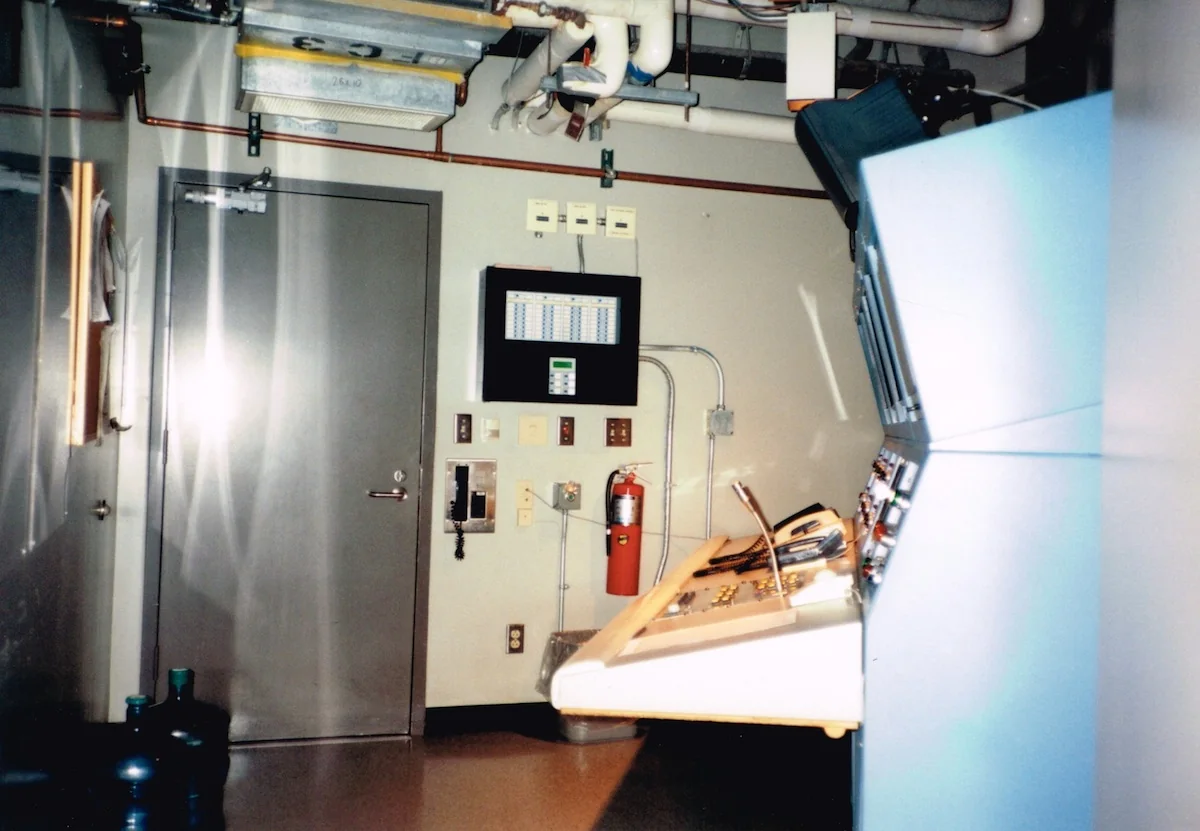
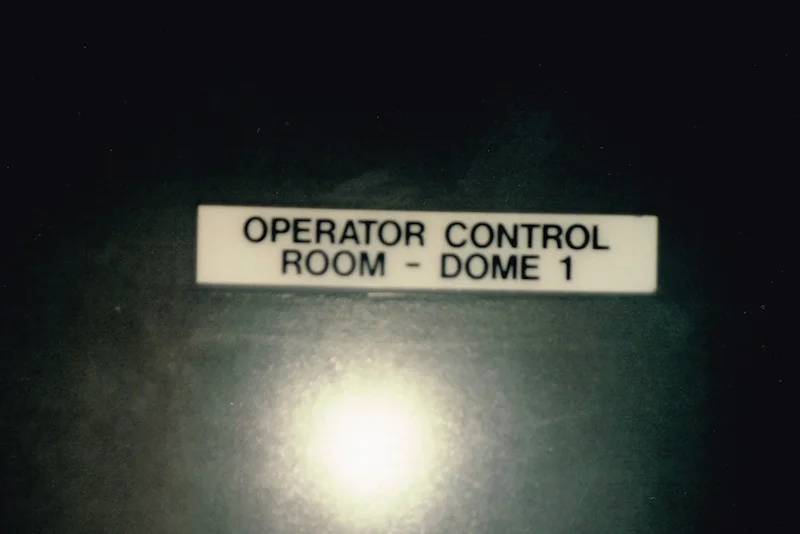
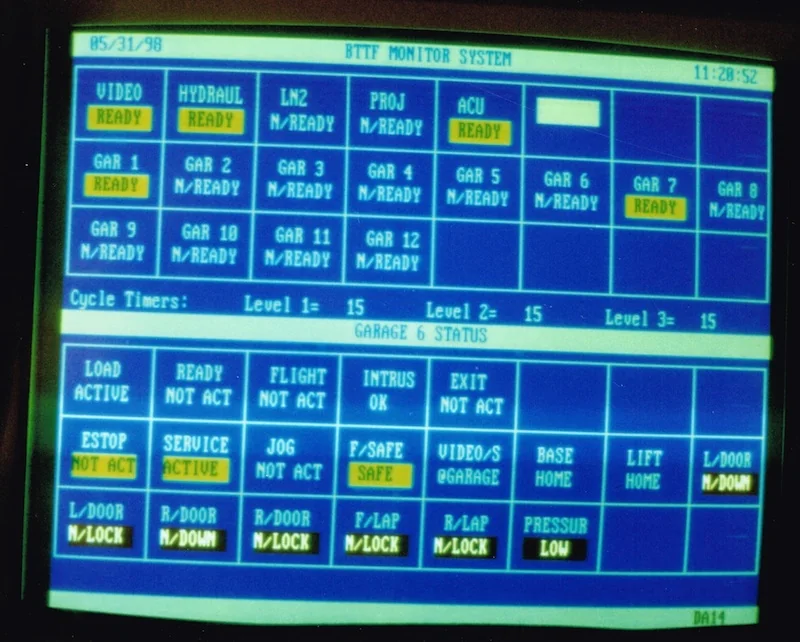
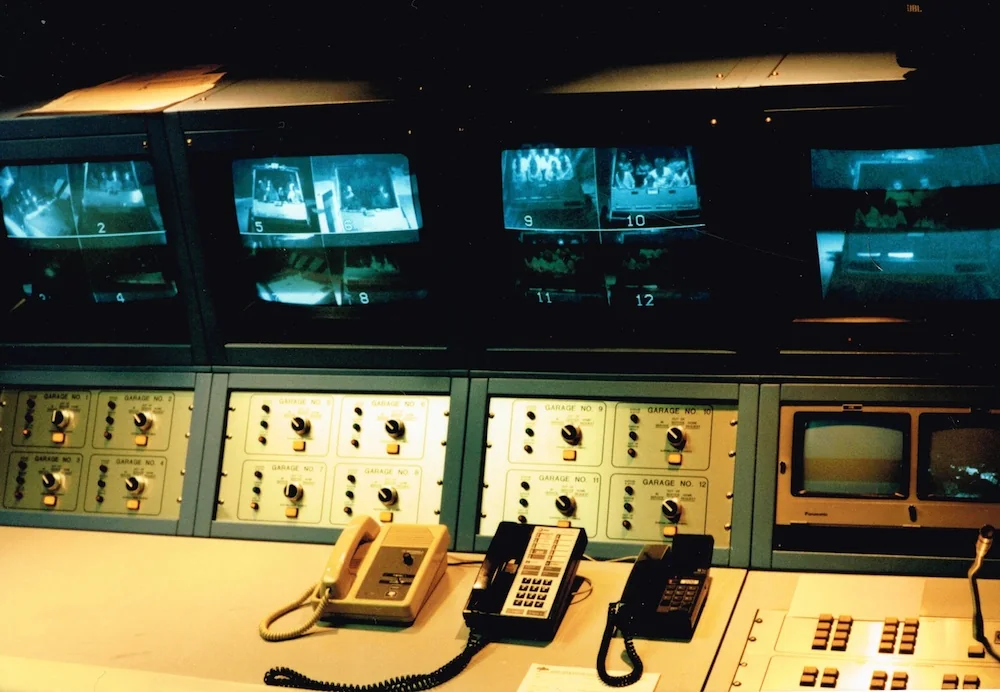
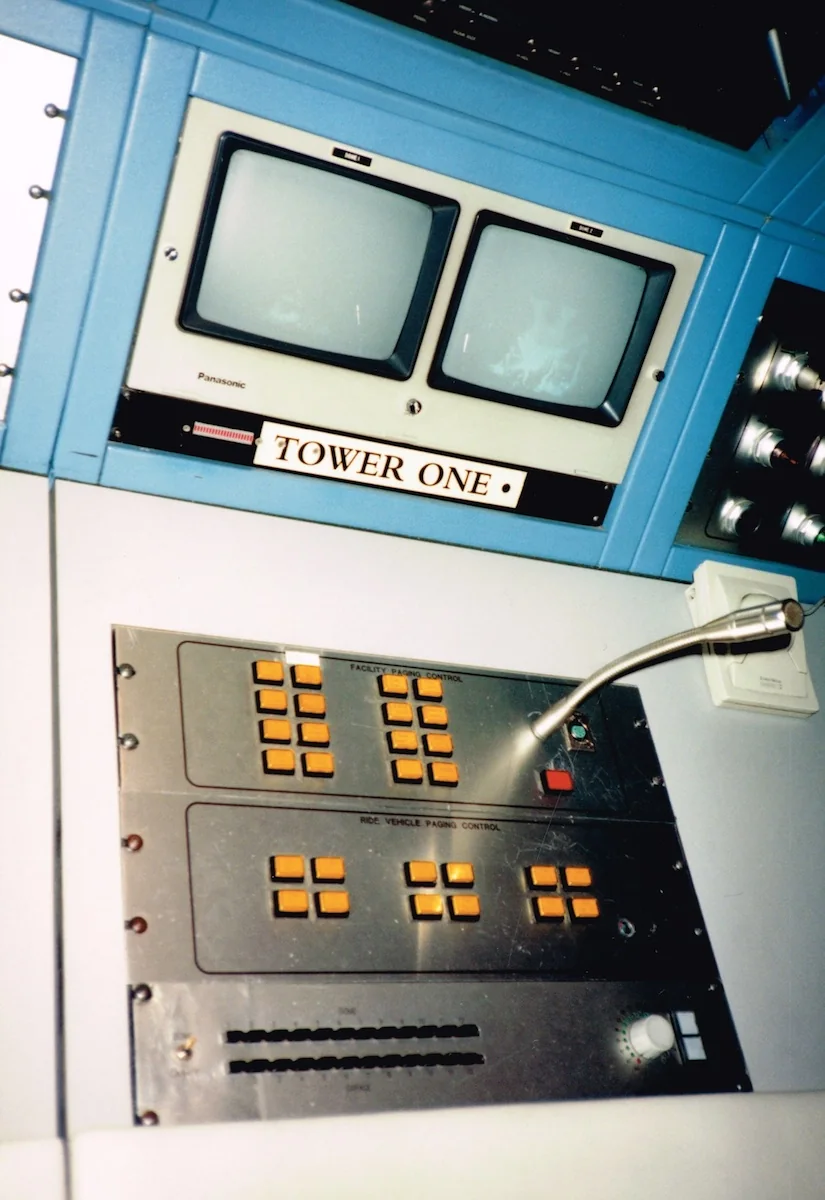
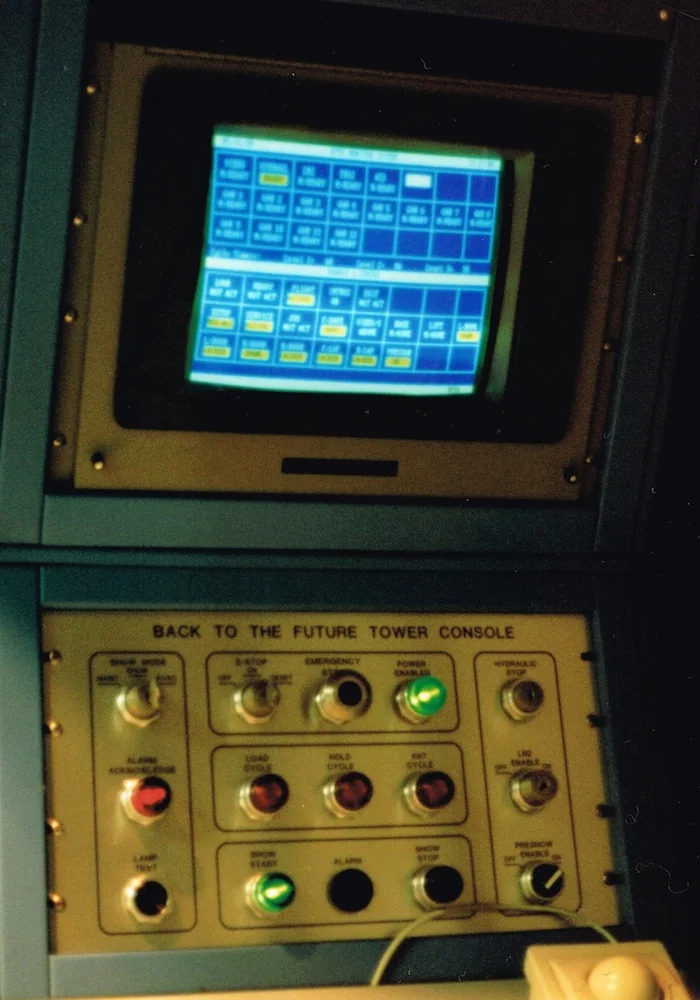
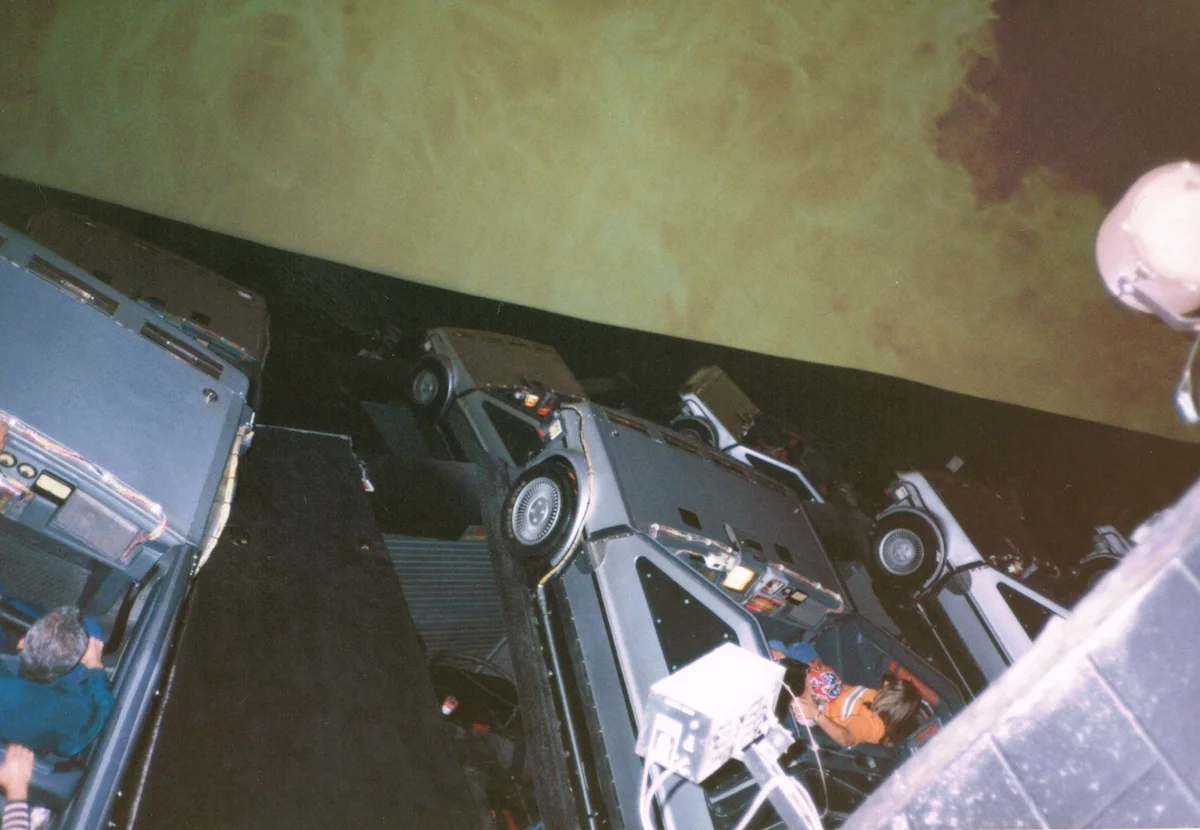
Photos courtesy of TheStudioTour.com. This section links back to their Back to the Future archive as the original source for these images.
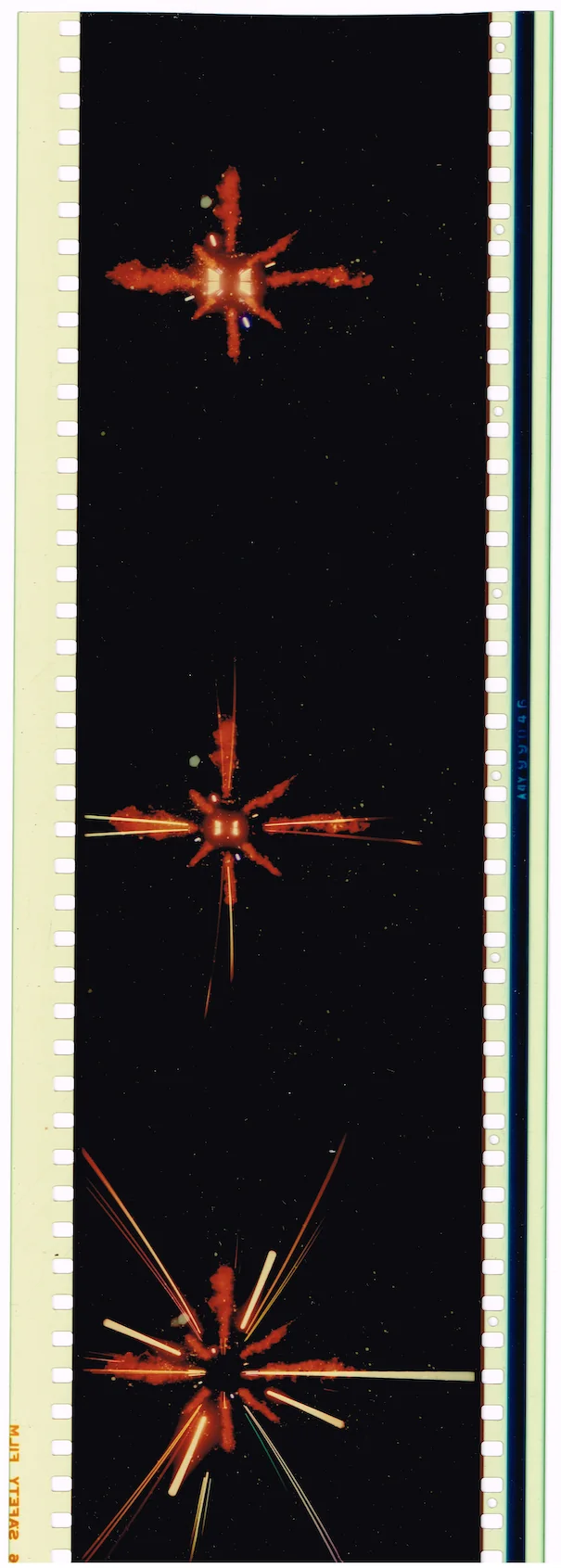
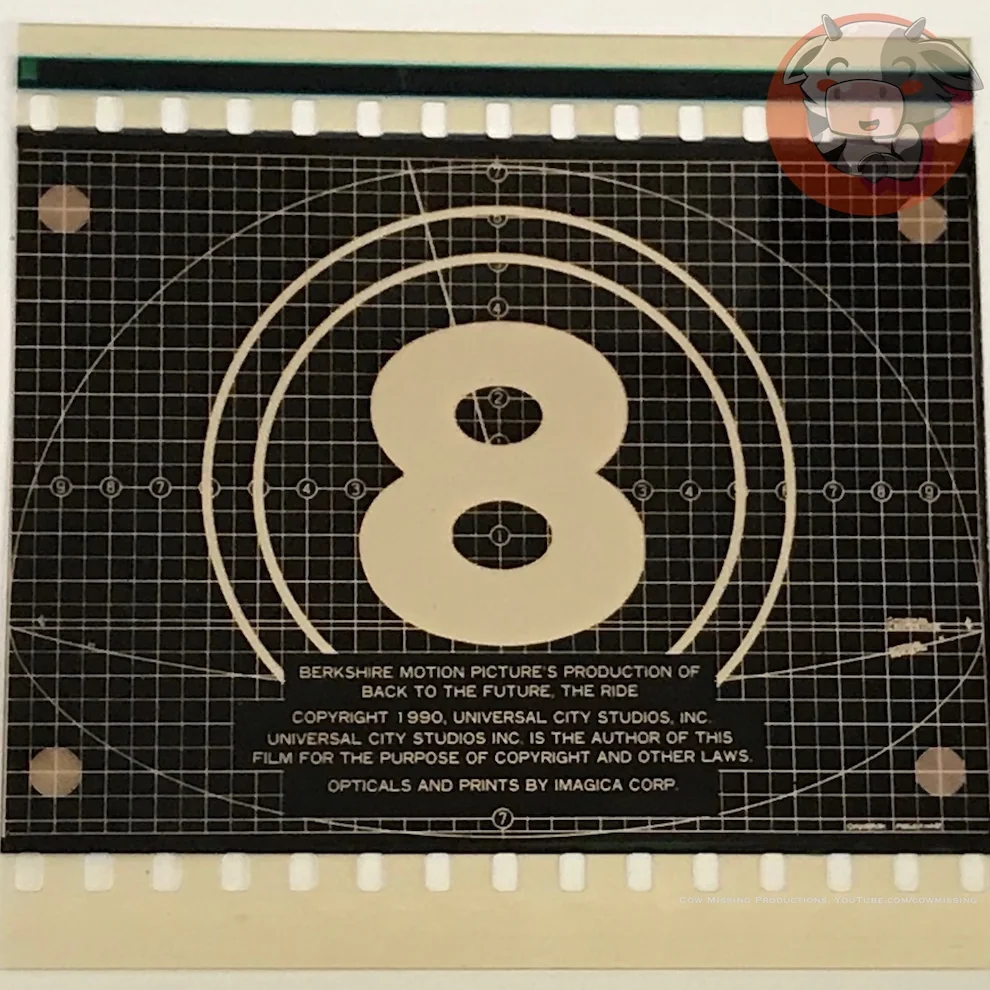
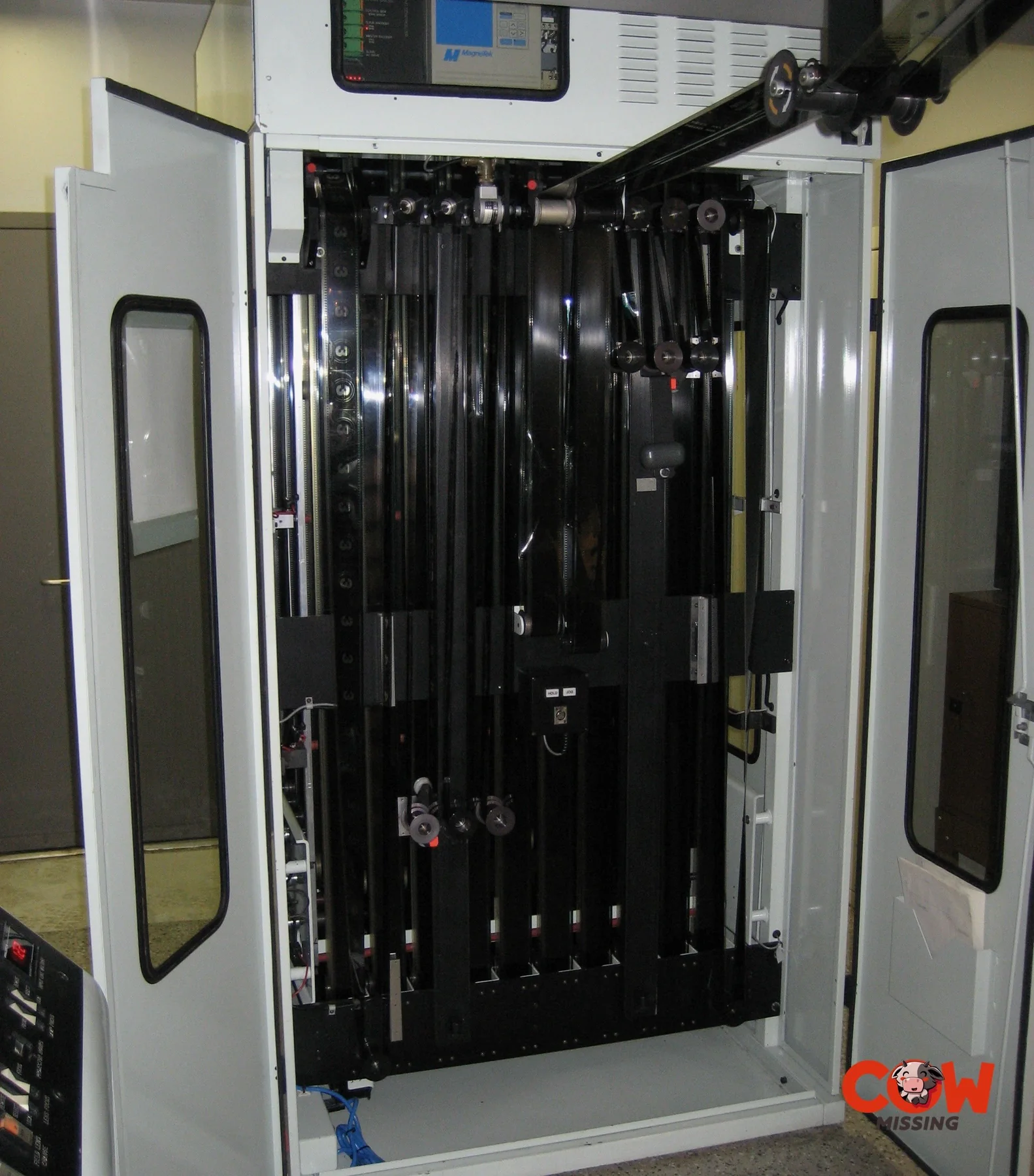
Back to the Future: The Ride belonged to an era when massive physical film systems powered some of the most advanced attractions in the world. The film print and loop cabinet materials preserve the mechanical reality behind the on screen illusion: huge images, specialized projection, careful handling, and a show system built around precision.
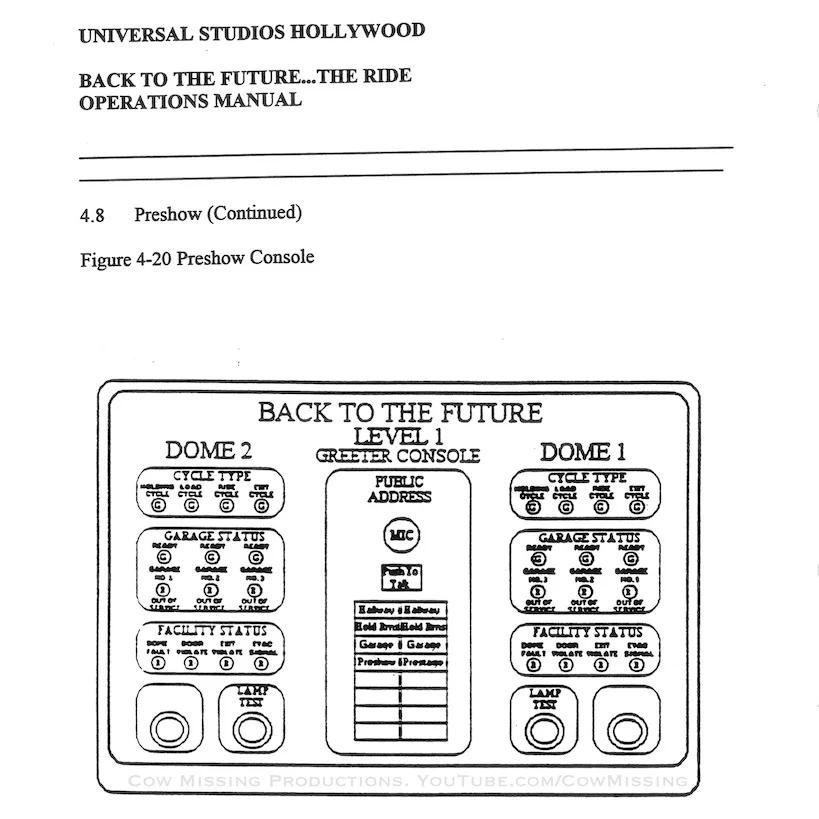
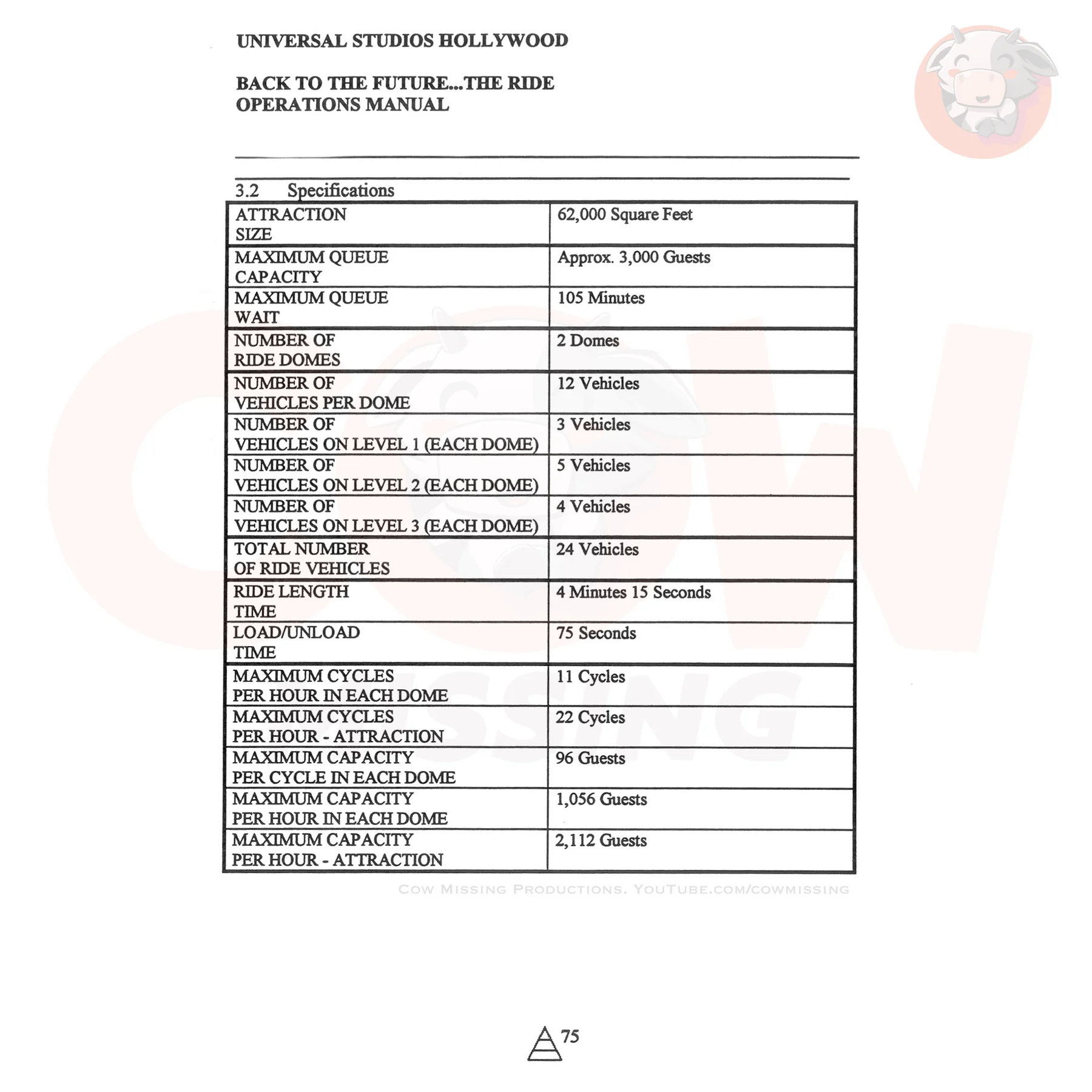
The operations manual images show how Universal documented attraction details, guest recovery, specifications, story setup, and console references. This material gives the archive a practical operating layer that goes beyond publicity and shows how a major ride was managed day to day.
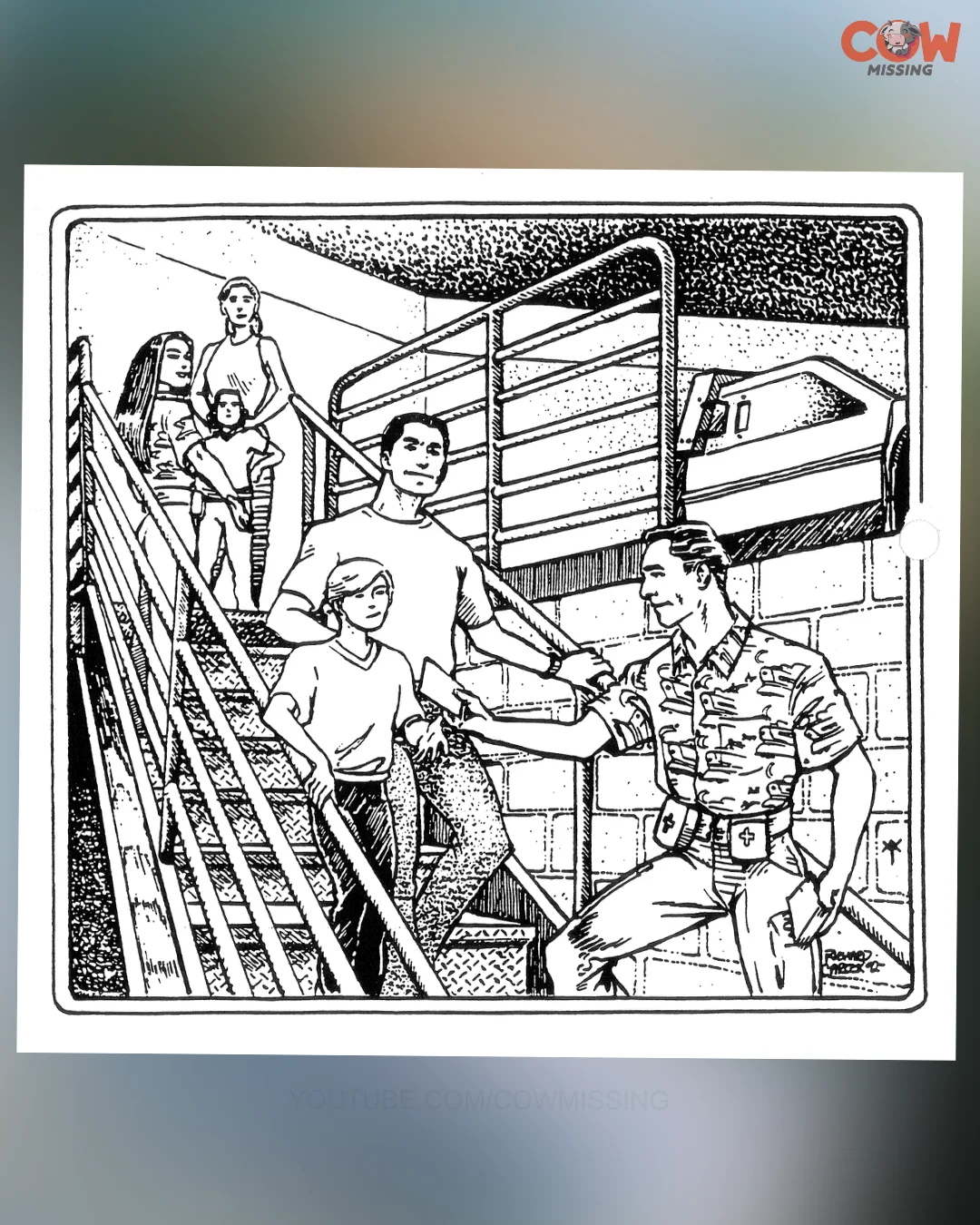
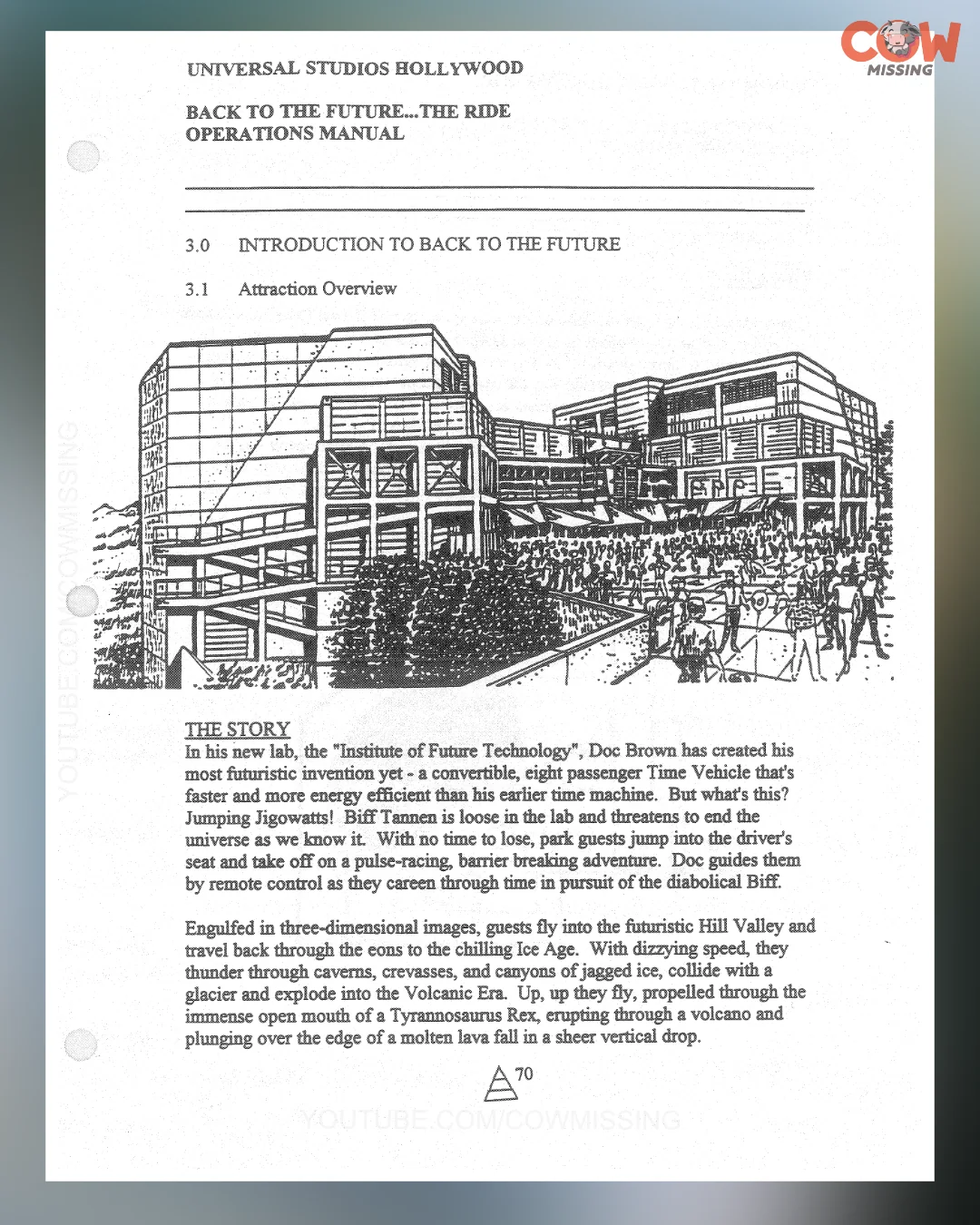
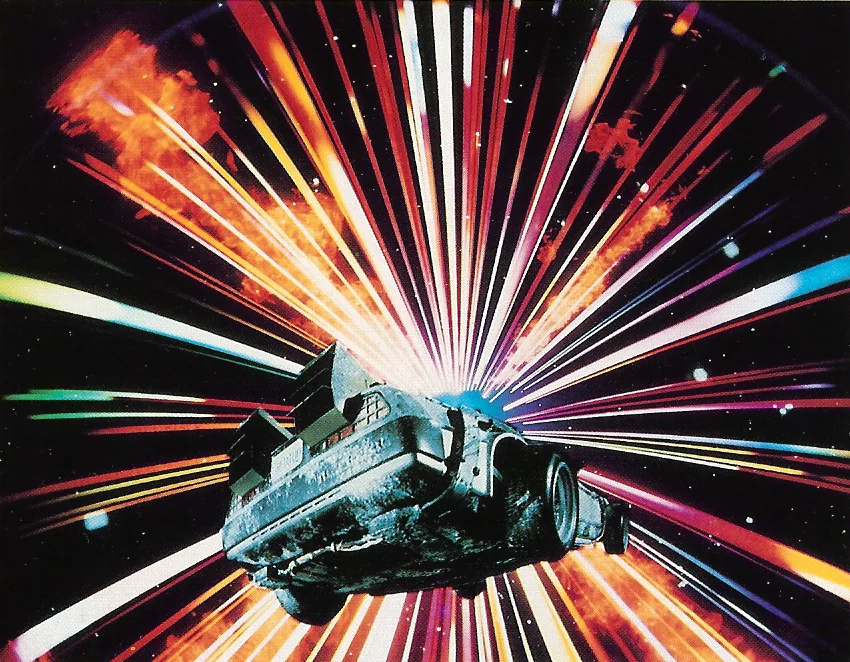
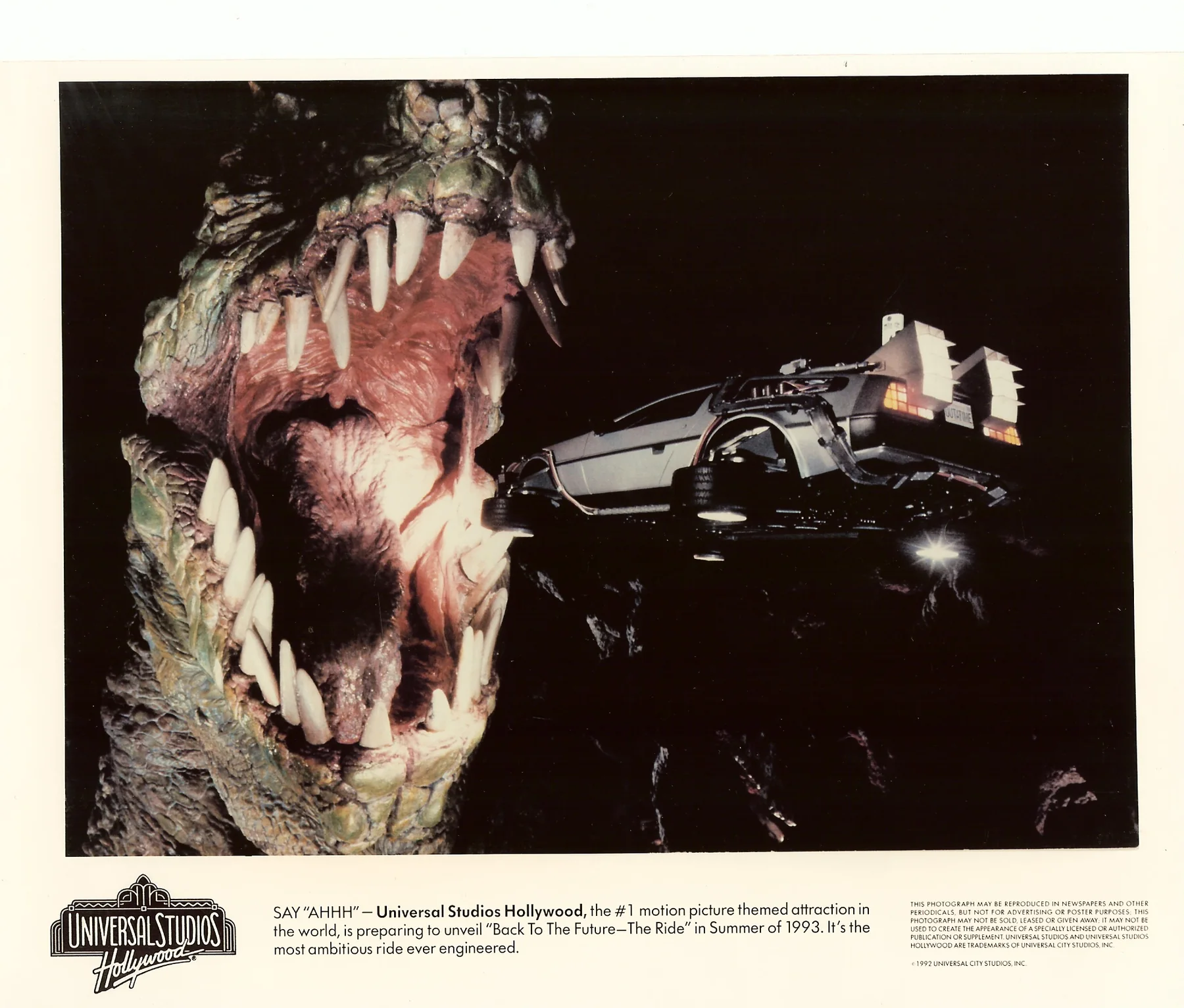
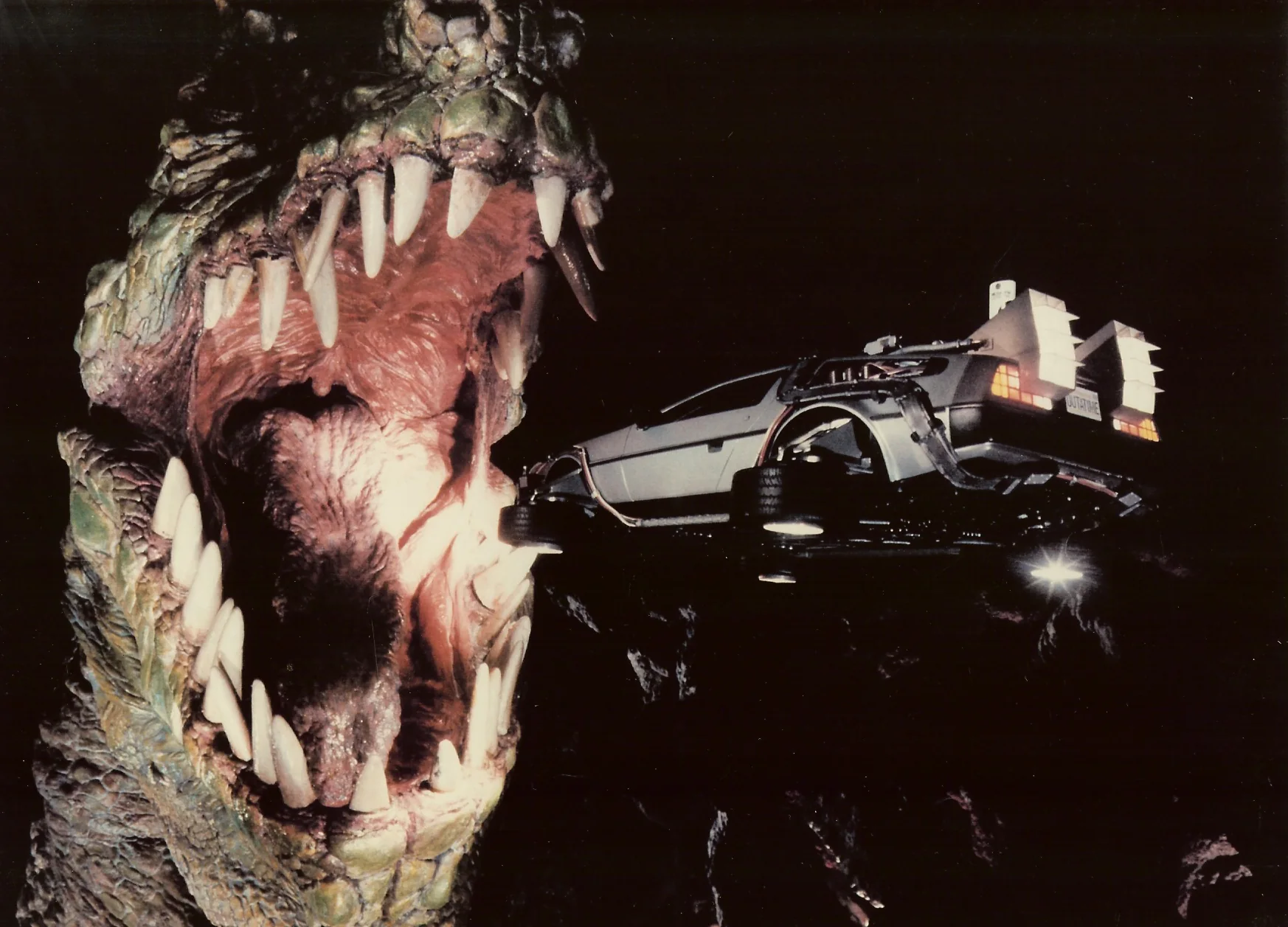
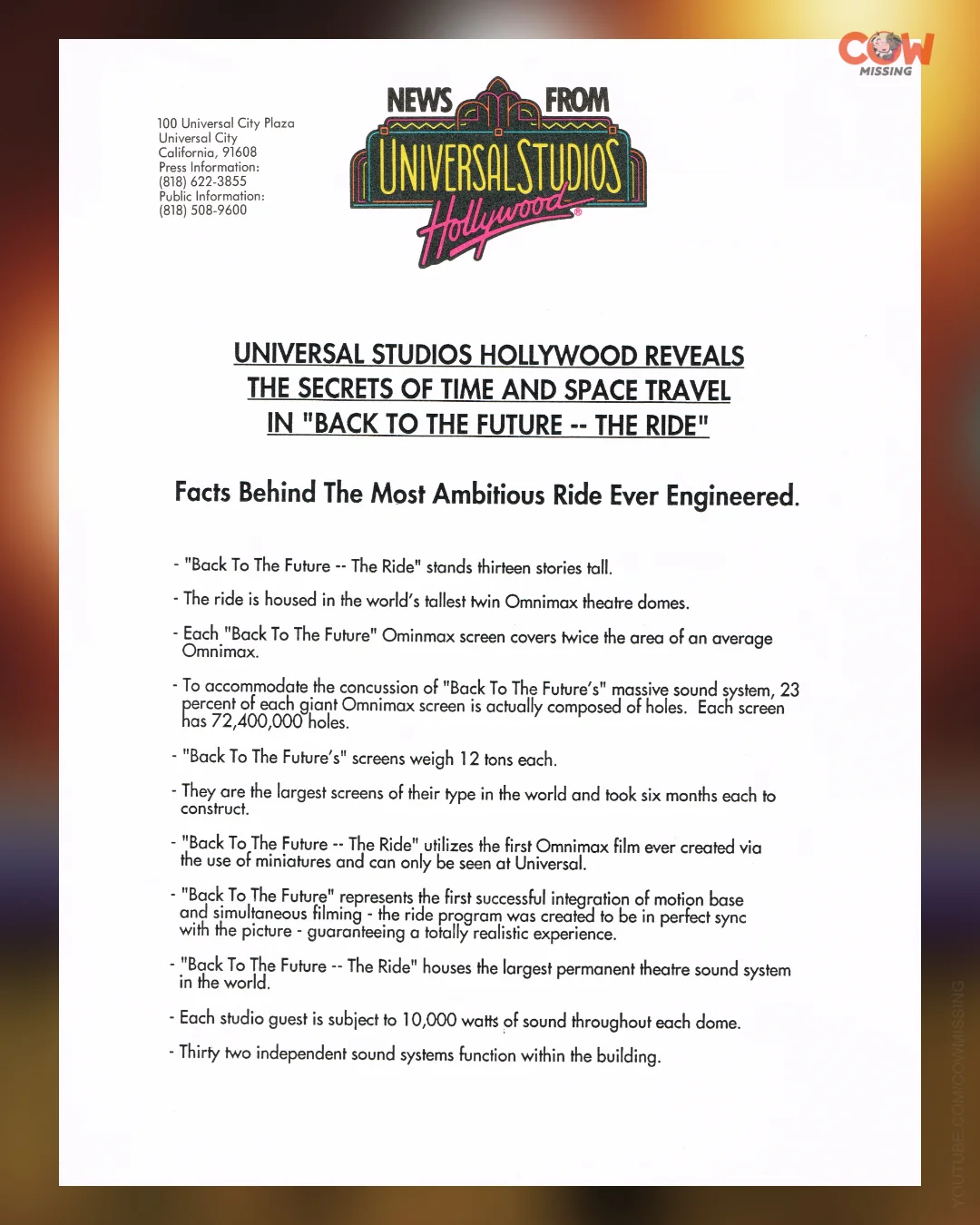
The press archive preserves promotional photography and public relations imagery tied to Back to the Future: The Ride. These assets show how Universal presented the attraction to media, guests, and fans as a major extension of the Back to the Future franchise.
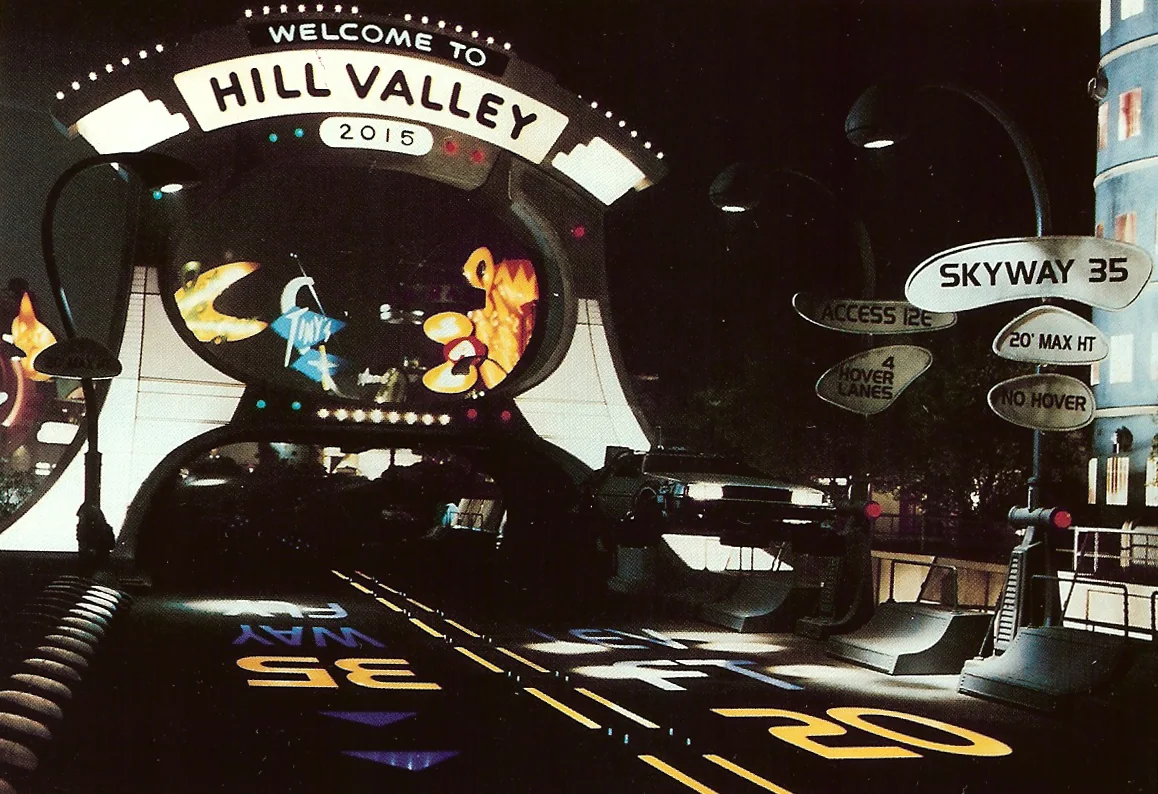
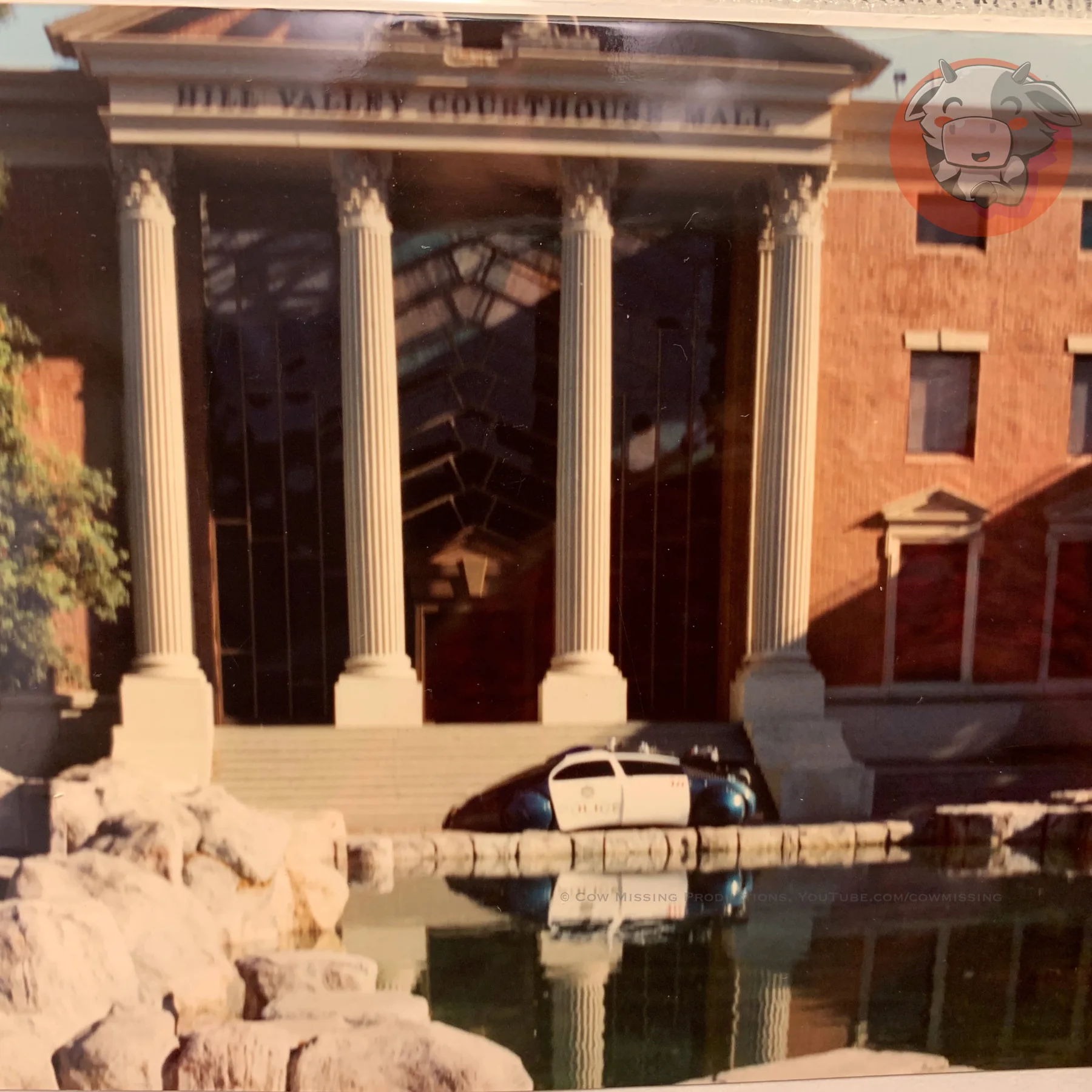
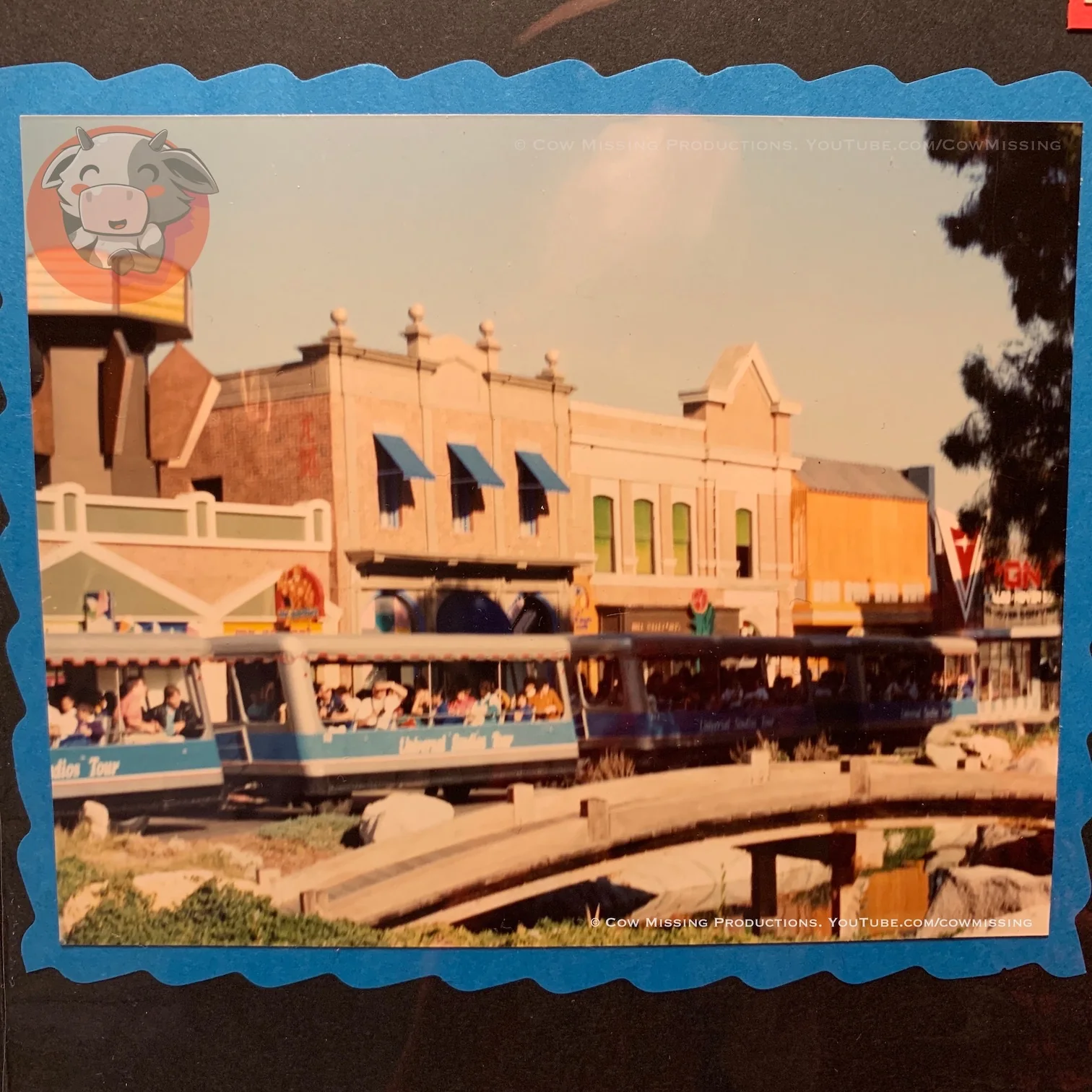
Back to the Future: The Ride existed inside the theme park, but the franchise's physical history also lived on the Universal backlot. Courthouse Square, known to fans as the heart of Hill Valley, connected the ride experience to the actual filming legacy of Back to the Future. These images help bridge the attraction, the movies, and the studio tour history that made Universal unique.
This section preserves original Back to the Future: The Ride artwork used throughout the attraction's history, including official logos, promotional graphics, marketing materials, and archive imagery. These files have been optimized for web viewing while preserving larger versions for historical reference.
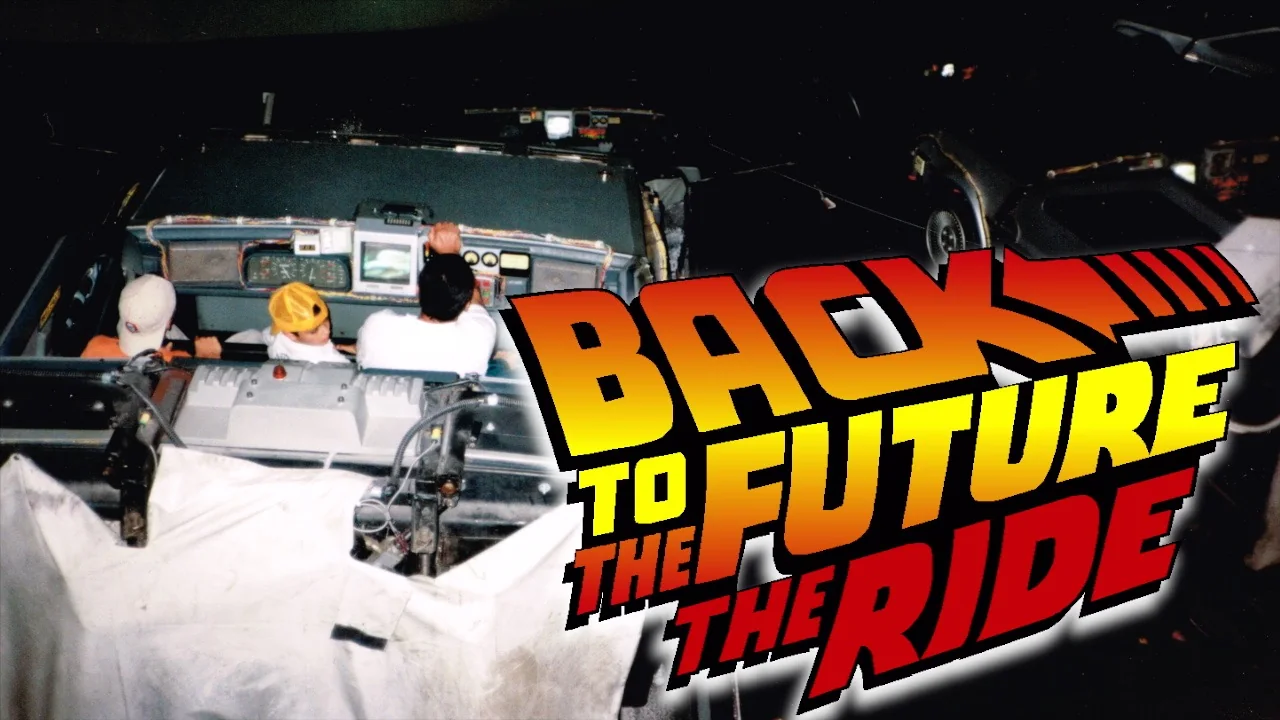
Videos remain central to the Cow Missing archive project. This section keeps ride footage, commercials, behind the scenes material, technical features, EPK content, and closing coverage together so fans can revisit the attraction as an experience, not just as a list of dates.
A complete ride footage archive preserving the attraction experience.
Archive footage from the Hollywood version of the attraction.
Behind the scenes look at the creation of the attraction.
A technical look at the projection systems behind large format ride films.
A television segment exploring ride films and cinematic theme park technology.
A closer look at vehicle movement and dome presentation.
A 1993 television commercial for the Hollywood attraction.
Additional launch era commercial material.
Promotional EPK material from the attraction launch era.
News coverage from the ride's 2007 closing period.
Explore the full Cow Missing playlist dedicated to Back to the Future: The Ride, including additional footage, commercials, EPK material, behind the scenes segments, and related historical content.
View Full PlaylistCow Missing Archive: Original attraction documentation, photo organization, video embeds, web presentation, and archive curation.
Photo Collection: Back to the Future: The Ride images preserved for the Cow Missing Archive and organized by category, including planning, advertising, building, operations, manuals, press, film print, and backlot history.
Video Archive: Embedded Cow Missing YouTube footage and playlist material documenting the attraction, commercials, behind-the-scenes features, EPK content, and closing-era coverage.
Historical Reference: Additional attraction context cross-referenced with TheStudioTour.com and other public historical resources.
If you visited Back to the Future: The Ride, worked at the attraction, photographed the queue, exterior, preshow, ride building, or saved park materials from this era, your contribution may help preserve details that are not widely documented online.
The archive is especially interested in material that shows how the attraction changed over time, including queue and preshow details, attraction signage, employee memories, operating documentation, park maps, construction views, closing-era documentation, and rare video footage.
Queue, facade, Institute of Future Technology details, preshow monitors, signage, construction, closing, and exterior views.
Home video, queue or preshow footage, ride-area clips, TV segments, promotional material, or rare attraction recordings.
Operations stories, technical recollections, tower/control room context, costume details, backstage context, and guest-flow notes.
Park maps, brochures, advertisements, press materials, tickets, signage, operating guides, or attraction handouts.
Photos or scans of attraction-related merchandise, retail displays, souvenir items, pins, apparel, or printed packaging.
Dates, names, location details, source notes, terminology, or added historical context that can improve accuracy.